
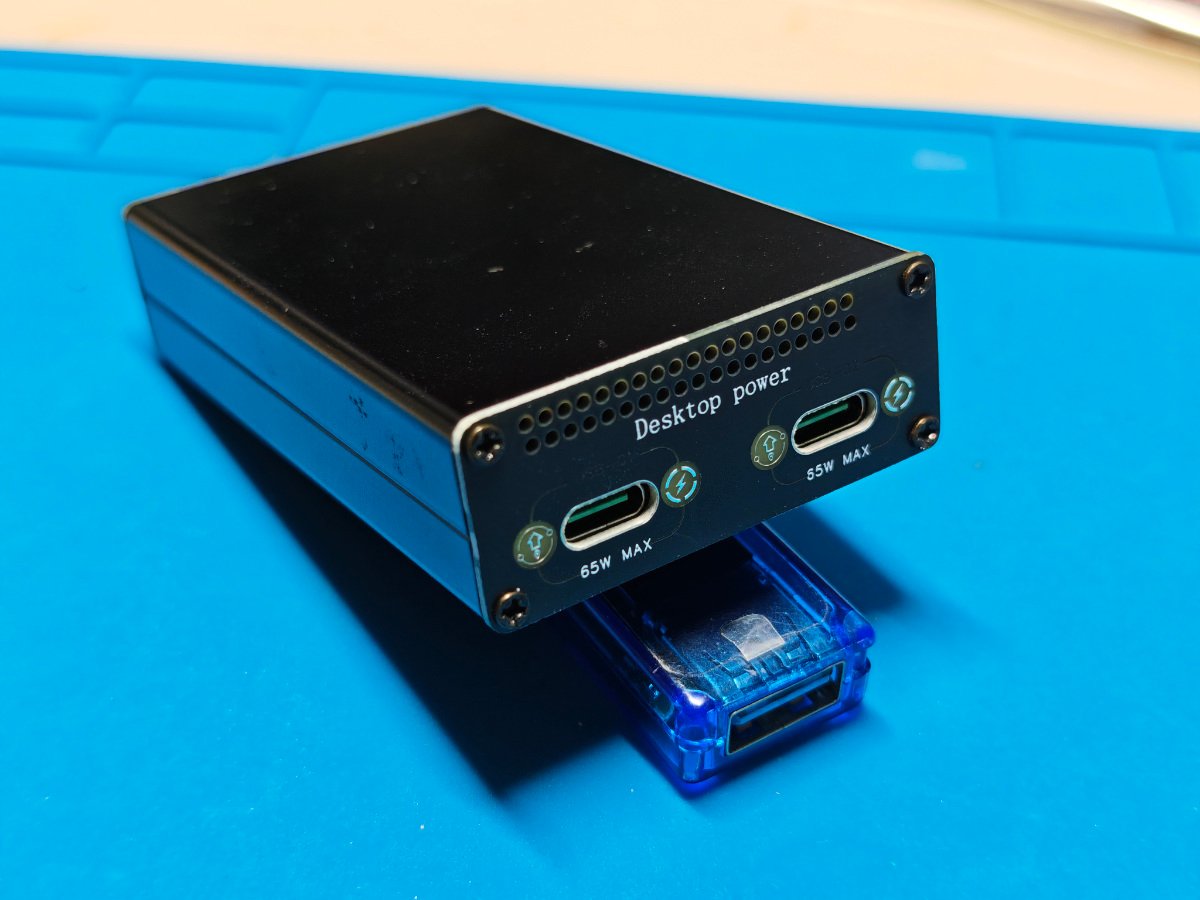
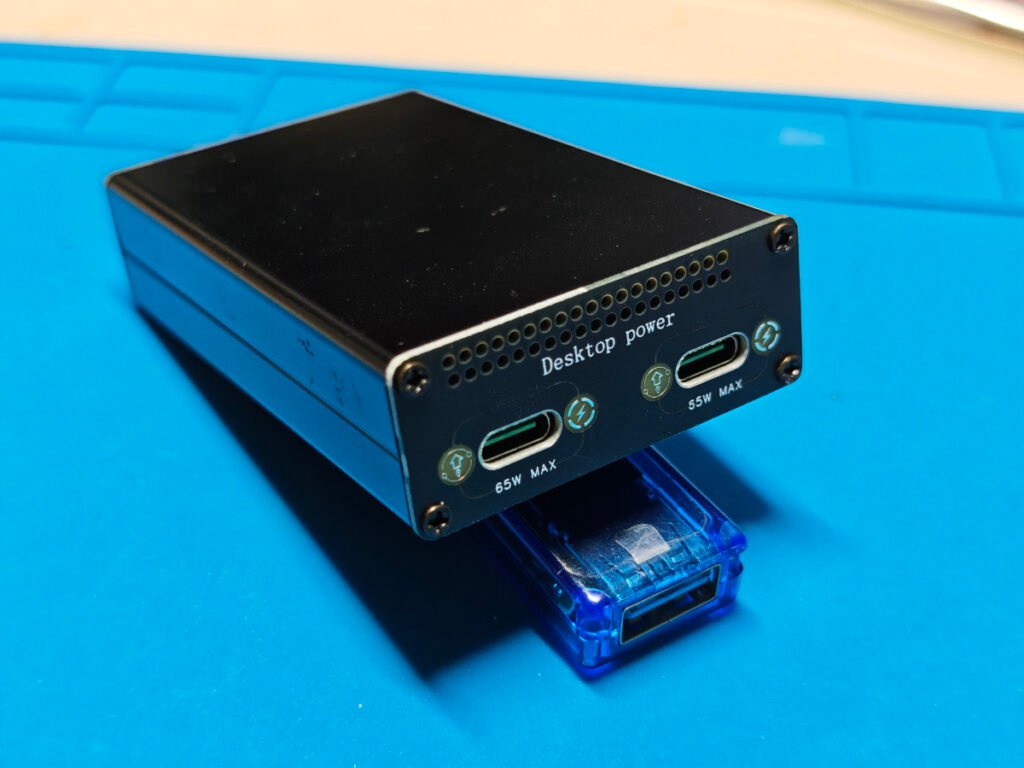
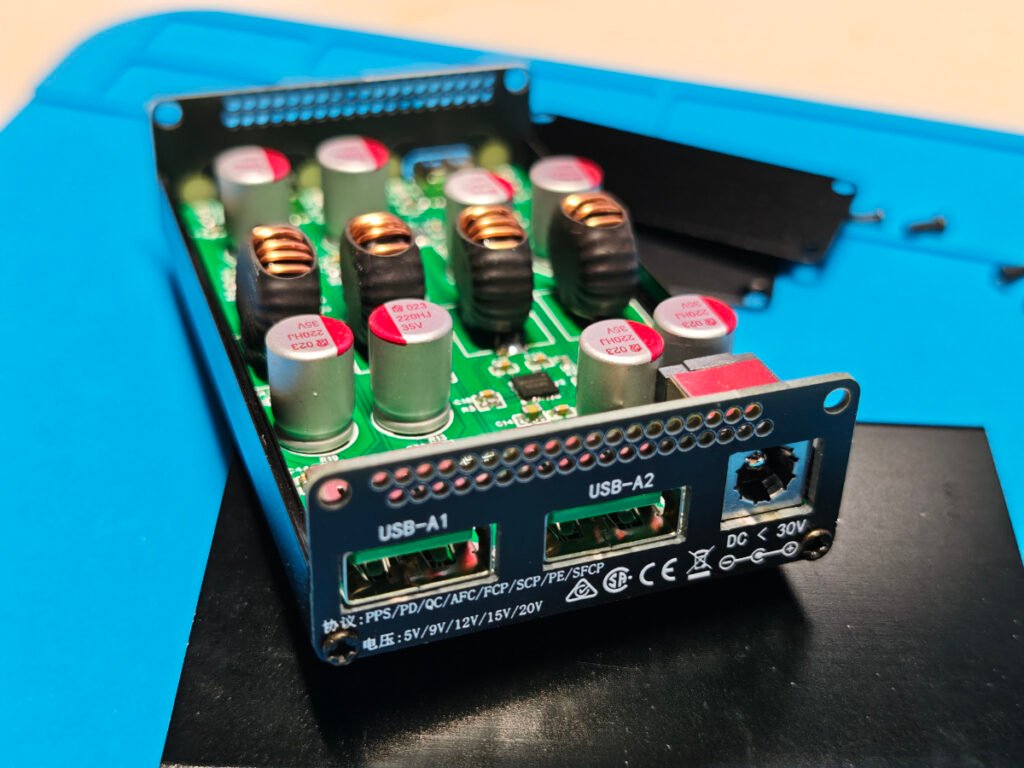
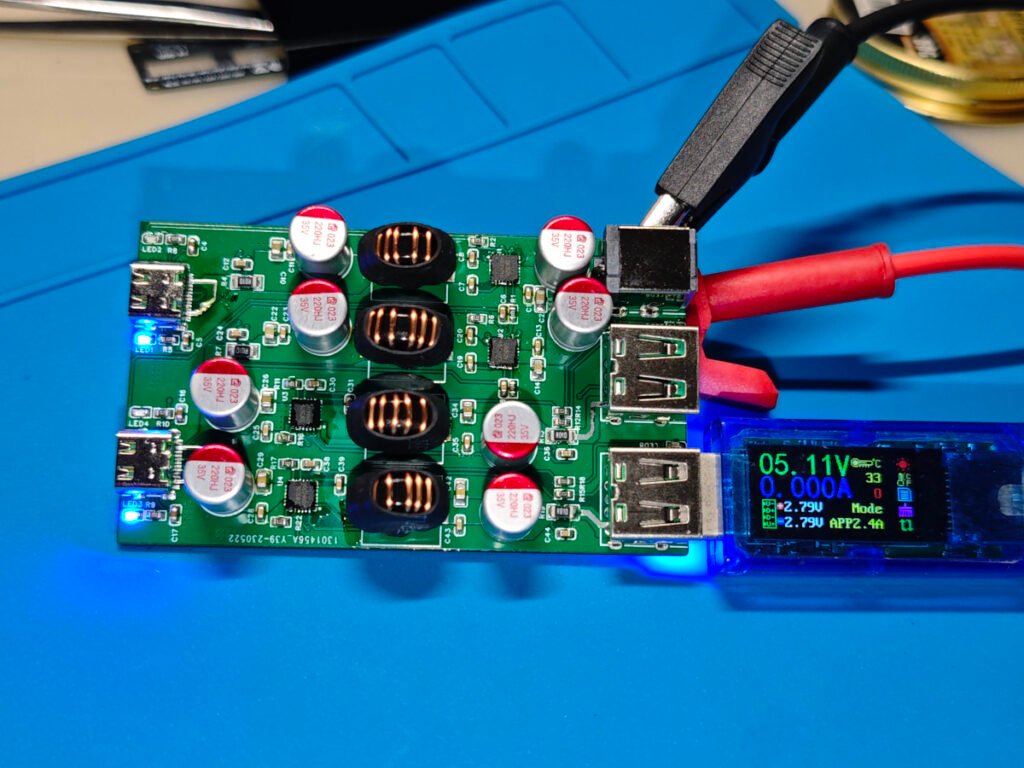
Nowadays, we use more and more electronic devices in daily life and work—like smartphones, tablets, laptops and smart wearables. Our need for quick charging is growing fast. Some people may always feel they don’t have enough charging ports on the desktop. To fix this issue, here comes a project, which is an open-source DIY desktop power supply designed around the Zhirong SW3526 chip, featuring a dual-USB-A and dual-USB-C port configuration with a maximum single-port output of 65W. The unit serves as a versatile charging solution for a wide range of electronic devices. It works with many fast-charging protocols such as PPS, PD, QC, AFC, FCP, SCP, PE and SFCP, as well as CC/CV mode. So it can charge devices from big brands like Apple, Samsung and Huawei easily. With only 80×20×50mm, the unit does not take lot of your desktop space. It has two USB-C ports on the front panel, while two USB-A ports and a DC input (35V max) port on its rear panel. All in all, the unit is perfect for daily use and for DIY fans who want a customizable, high-performance charging station that keeps their desk tidy and charging efficient.
Working Principle:
The core of this power supply is the Zhirong SW3526 chip. This chip has a high-efficiency switching buck converter and two N-power transistors. It is able to handle a maximum current of 3.5A. For example, when the input is 12V, output is 5V, the max current could reach 3A, with over 94% efficiency. The chip uses two working modes automatically: PFM mode and PWM mode. When its load needs little power (light load), it uses PFM mode to save energy. When the load needs more power (medium or heavy load), it switches to PWM mode to keep the output stable. You can set the output power by changing the value of the configuring resistor on PSET pin. By default, it gives a 65W output. The power supply accepts the input voltage between 6V and 35V, and converts it to different output voltages (5V, 9V, 12V, 15V, 20V) to satisfy the needs of connected devices. Both of the USB-A and USB-C ports can detect the charging protocol of the connected device (BC1.2, PD3.0, QC3.0 etc.). This process decides the protocol and the voltage used for charging its load.
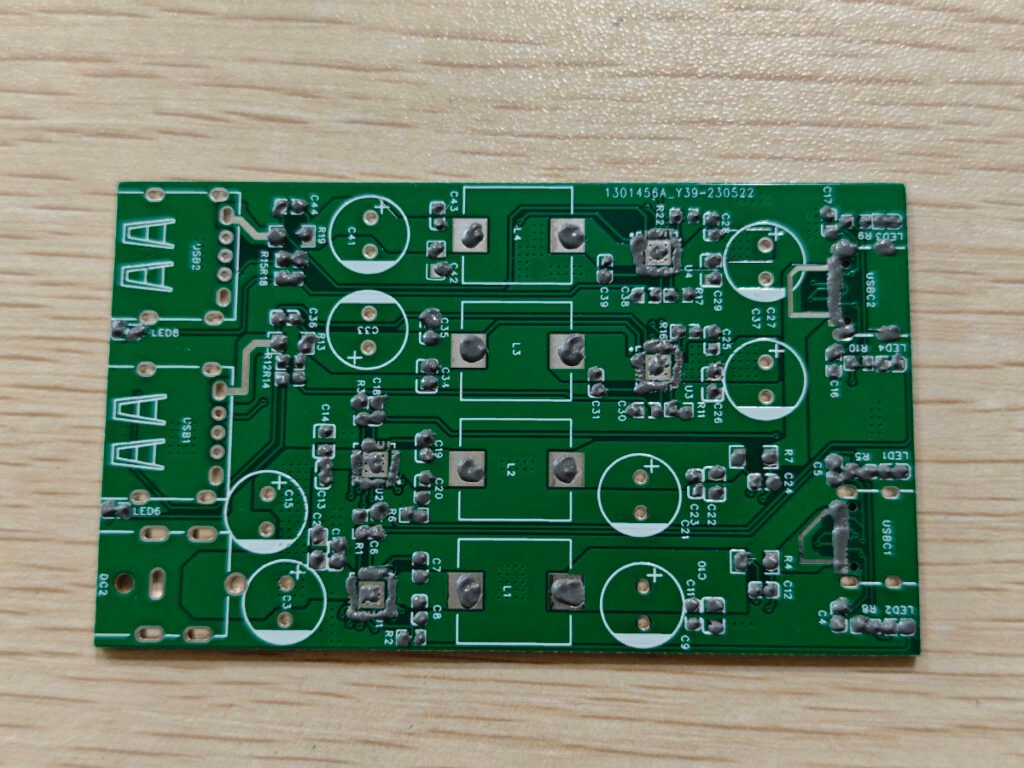
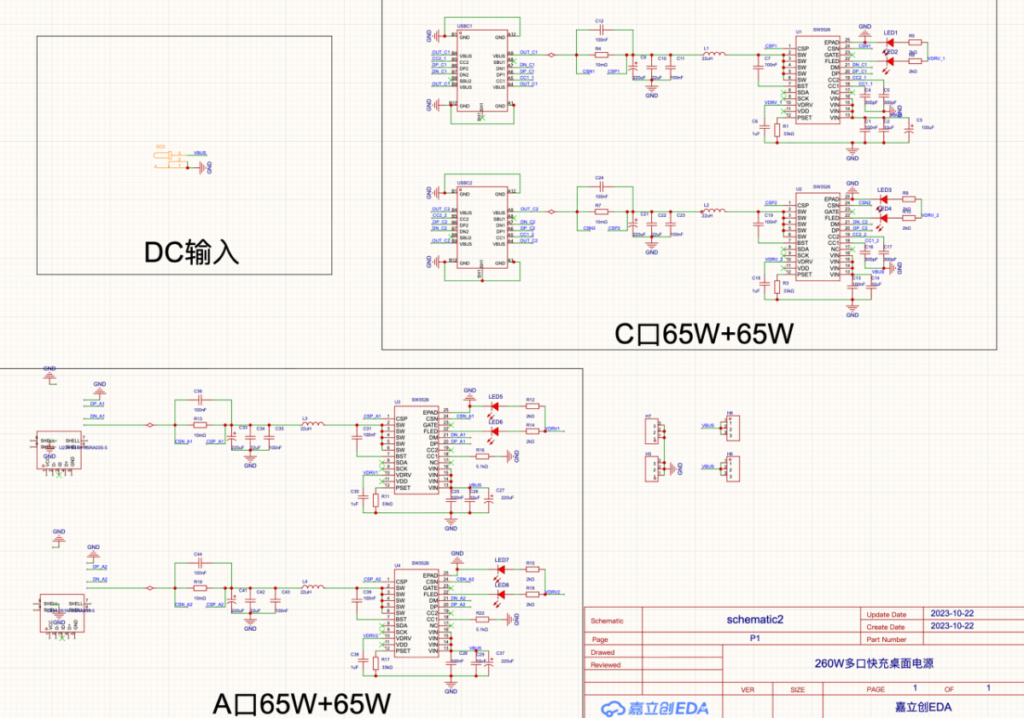
Here is the schematic of the project, it has three sections: the DC Input Module, the USB-C 65W Charging Modules (2 units), and the USB-A 65W Charging Modules (2 units).
A. DC Input Section
This part is like the “energy entrance” of the whole power supply. It takes in the DC voltage from an external source (DC2, the voltage range is 6V to 35V). The DC2 network feeds into SW3526 by pin13-16. Some filter capacitors are used to keep the input voltage stable and filter out any messy electrical interference. This way, it provides clean energy to the charging modules that come next.
B. USB-C and USB-A 65W Charging Section (4 independent units with same structures)
Each USB charging circuit has a core component: the Zhirong SW3526 chip (it’s a high-efficiency buck converter). It works with other parts like inductors, capacitors, and resistors to form a “voltage-lowering circuit”. The SW3526 chip takes the input DC voltage (such as 12V or 24V) and lowers it to the voltage that your device needs (like 5V, 9V, 12V, 15V, or 20V).
Charging Protocols: The chip is able to detect the charging protocol of the connected device, which gives out the maximum power that it can provide to the load, so that it charges your device quickly and protects it from damage. There are LED lights in the circuit to show if it’s charging.
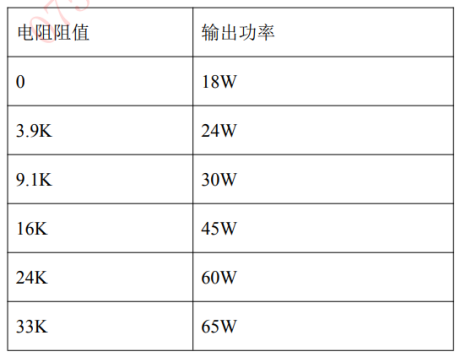
PSET Resistor: The PSET resistor on pin12 is used to limit the output power, you could limit its total output charing power by setting the resistor to different values. Here is a table with the output power vs different resistor values.
The whole power supply follows a simple logic: 1 DC input + 4 independent charging modules (2 USB-C + 2 USB-A). Each of the 4 modules can work on its own and output up to 65W of power. This design enables the charging of 4 different devices at the same time with their specific protocols—they won’t interfere with each other. In the end, this setup gives you a total charging power of 260W for multi-device use.
Project Link:
https://oshwhub.com/tnanastar/duo-kou-kuai-chong-zhuo-mian-dian-yuan-65w-65w-65w-65w