
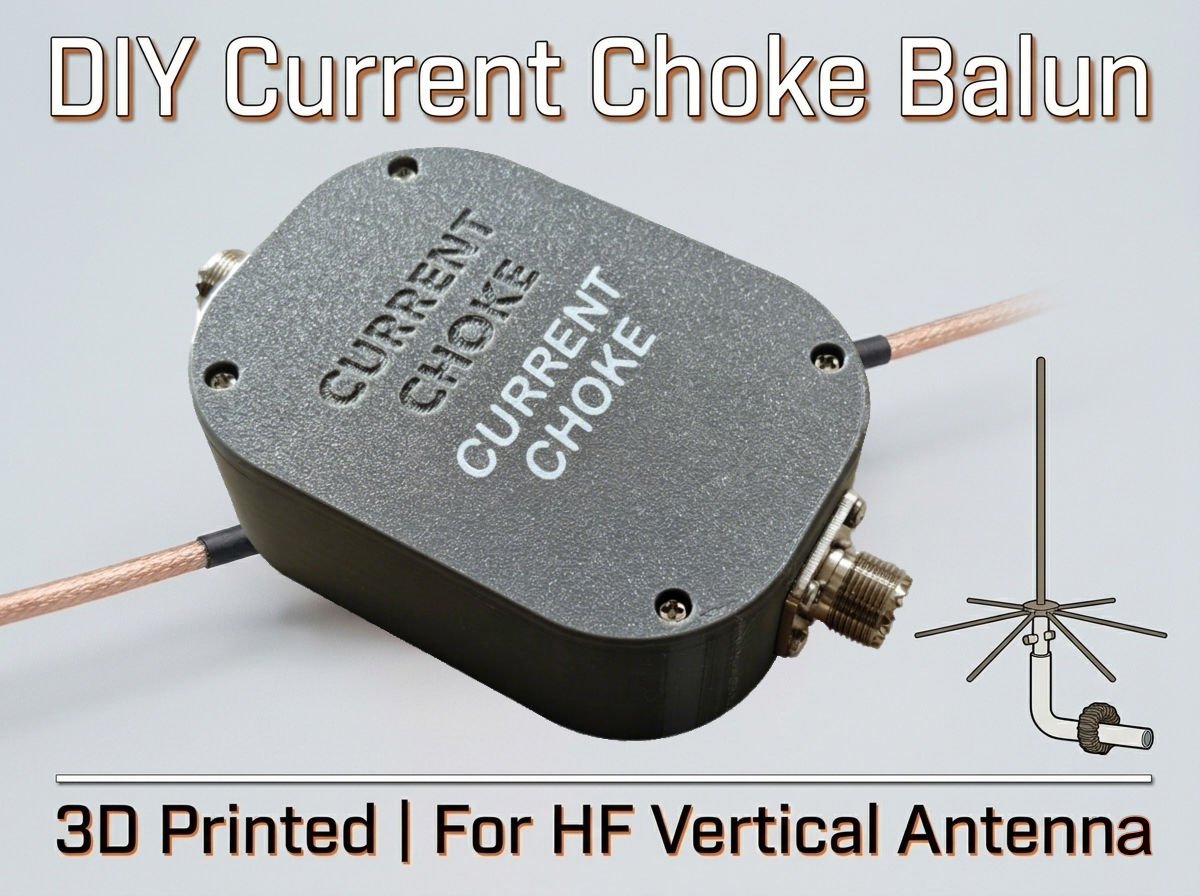
Overview:
A vertical antenna is an unbalanced antenna, but it may still need a common mode choke balun to choke out the unwanted current flowing on the outer surface of your coax braid.
Reasons for A Choke Balun:
1. Blocking Unwanted Radiation from the Feedline
A vertical antenna uses the radial system (your elevated ground plane) as its “other half.” Ideally, the RF currents should flow from the center conductor of the coax, up the vertical element, and return through the radials to the shield braid at the feed point. While a vertical over a perfect, symmetrical ground plane is considered an unbalanced system that naturally matches the unbalanced coaxial cable, in the real world, the system is rarely perfect. Your radials are never perfectly symmetrical or equally clear of nearby objects. The finite number of radials (especially if you have less than 10-12) may not provide a perfect return path.
This real-world imperfection unbalances the currents at the feed point, causing a portion of the RF energy to flow onto the outer surface of the coaxial cable shield. This is the Common-Mode Current.
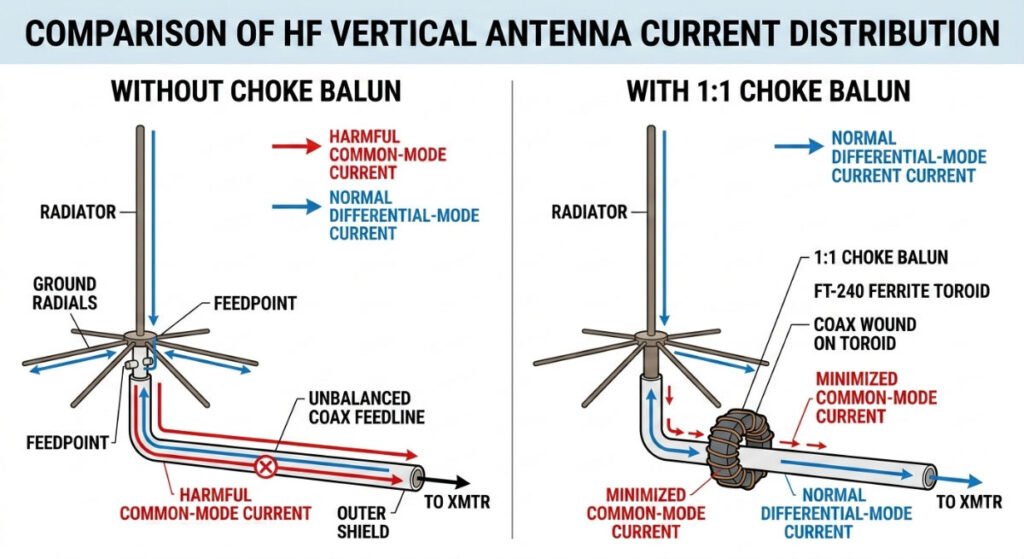
A 1:1 current balun (which is exactly what a choke balun is when used here) creates a high impedance block to this unwanted CMC, forcing the RF energy to stay confined to the antenna and its intended radiator/radial system. The picture below explains the importance of a choke balun in an antenna system.
2. Maintaining Antenna Performance
Without the choke balun, the outer shield of your coax acts as an unintentional radiator, which leads to two main issues.
The radiating coax distorts the vertical’s intended low-angle, omnidirectional radiation pattern. This can reduce your performance for long-distance (DX) contacts. The coax shield carries RF energy into your shack, causing Radio Frequency Interference (RFI) with your station equipment, computer, and possibly nearby TVs (TVI).
A 1:1 choke balun must be placed as close as possible to the antenna feed point (where the coax connects to the vertical element/radial system) to suppress the CMC before it can travel down the line. In summary, for a clean signal, a stable radiation pattern, and minimal RFI in the shack, using a choke balun on your vertical antenna is a good practice.
Building a Choke Balun:
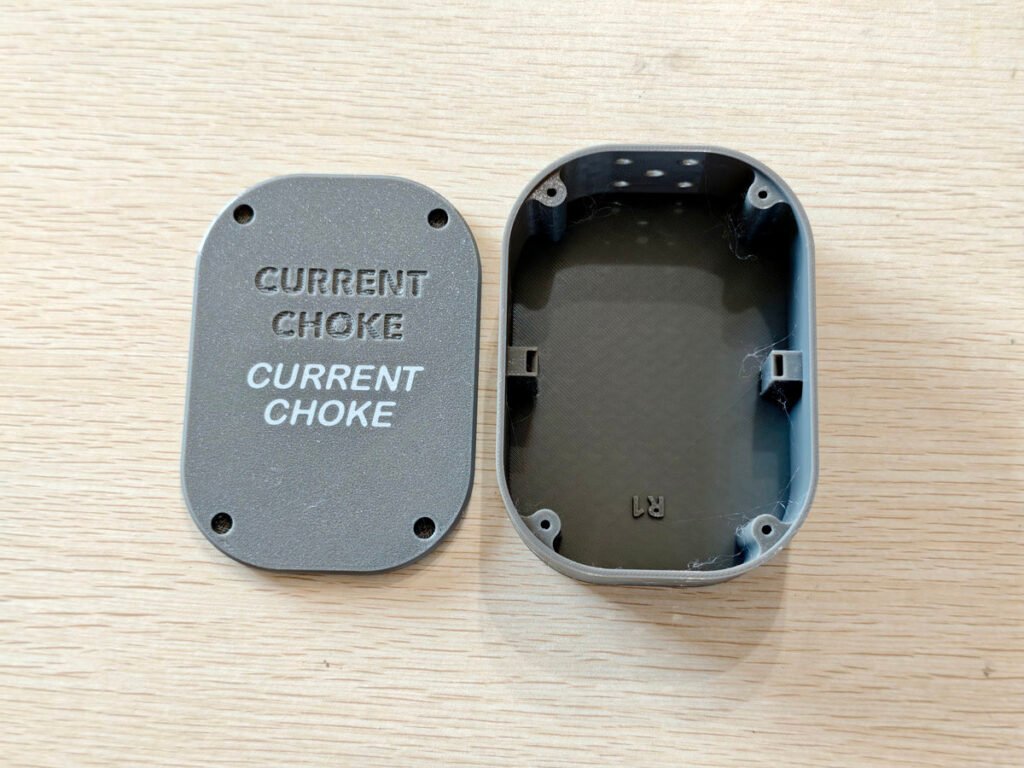
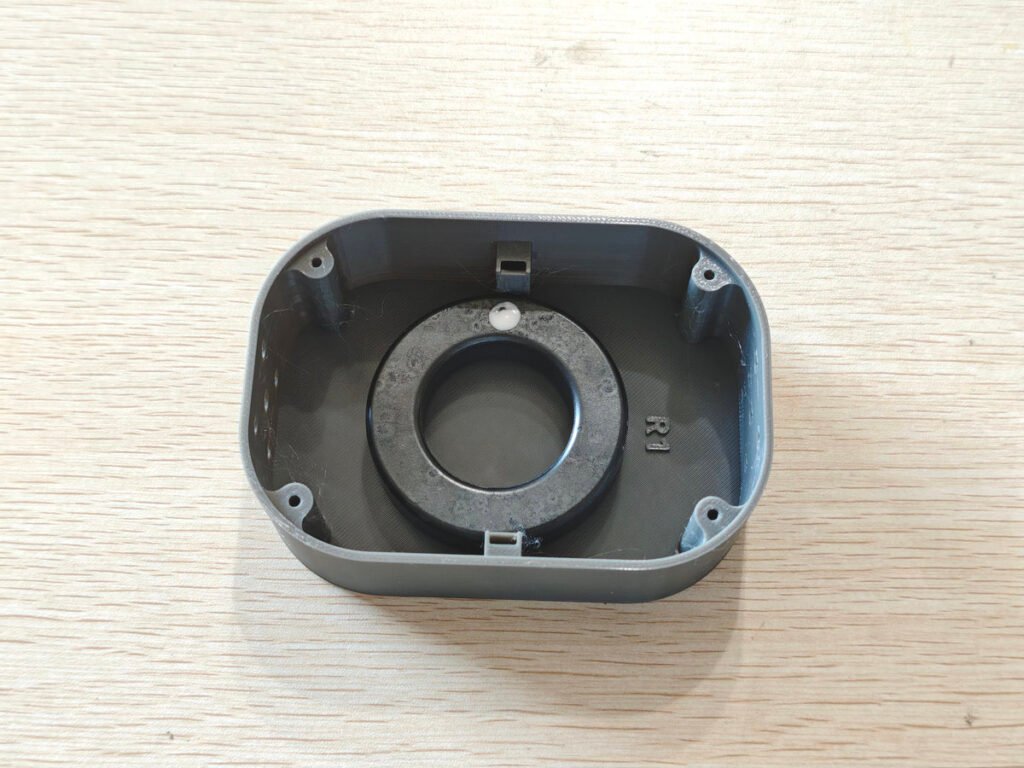
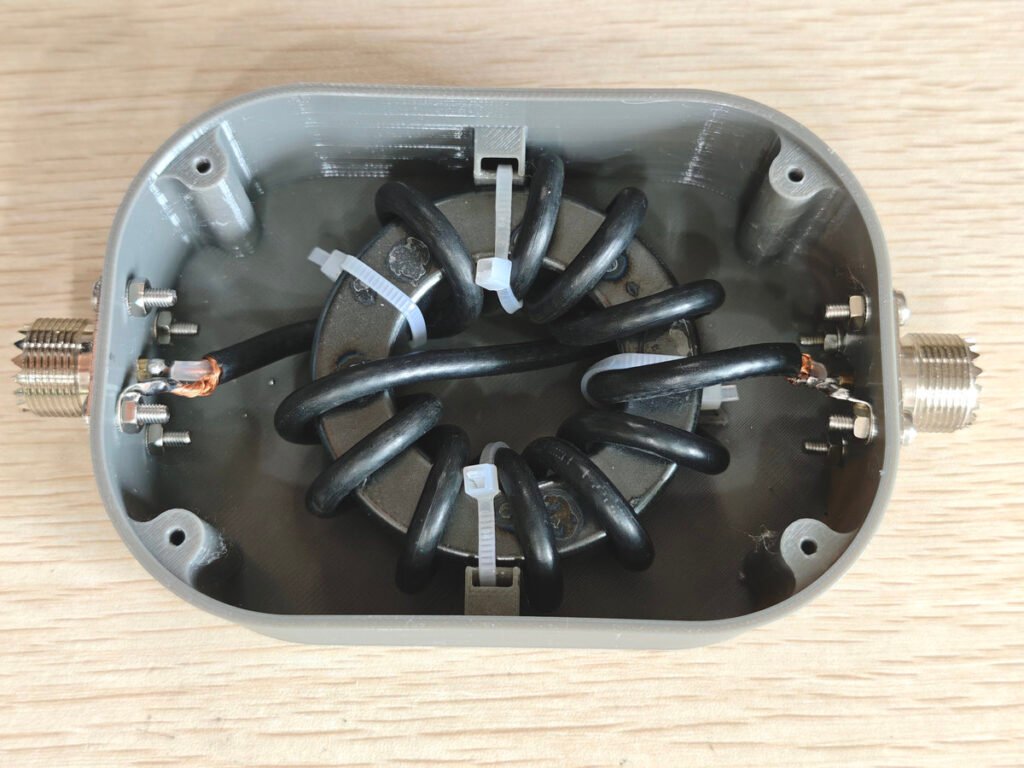
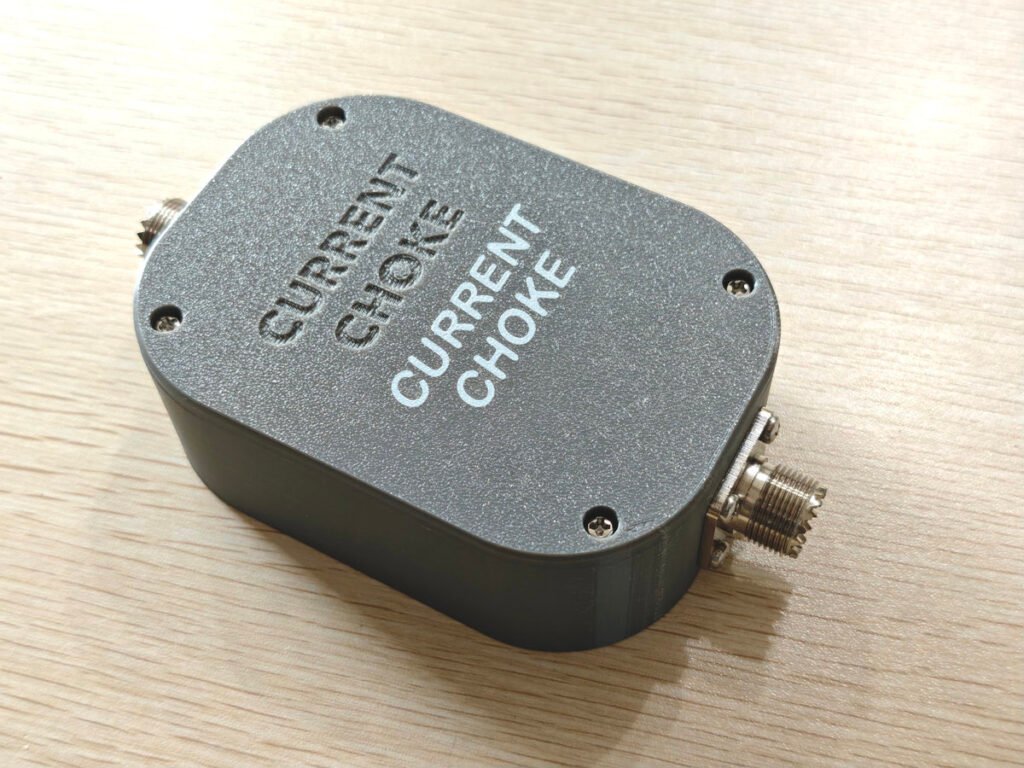
As the reasons above, I started to build a choke balun for my ground-elevated vertical. I have some #43 toroid cores at my disposal. For the enclosure, I found a good design on thingiverse, I remixed the design to make it adapted to my SO239 connectors.
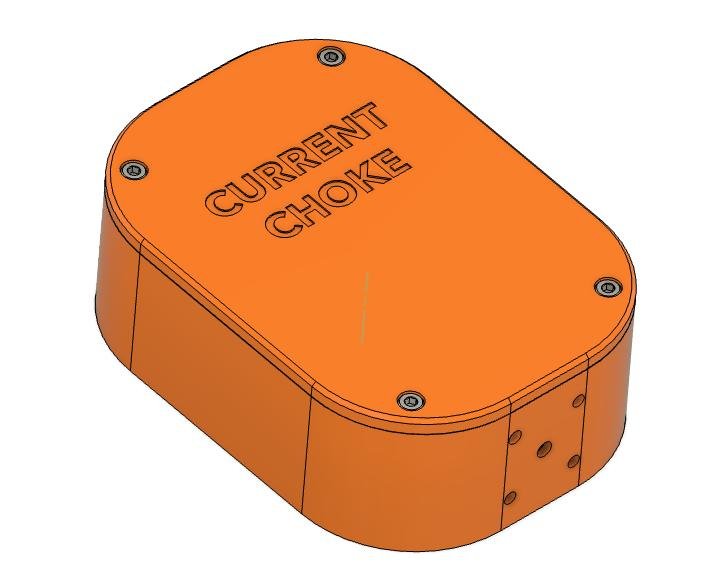
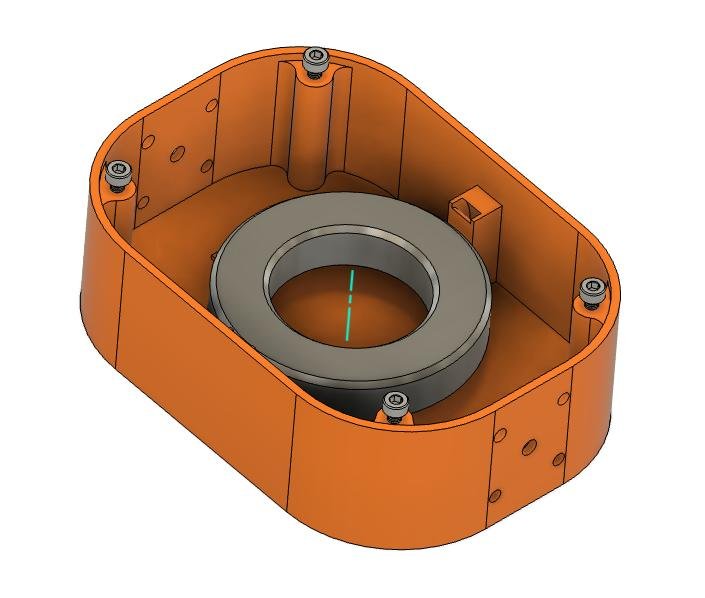
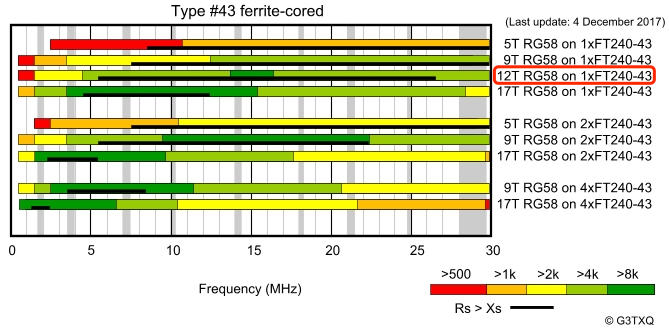
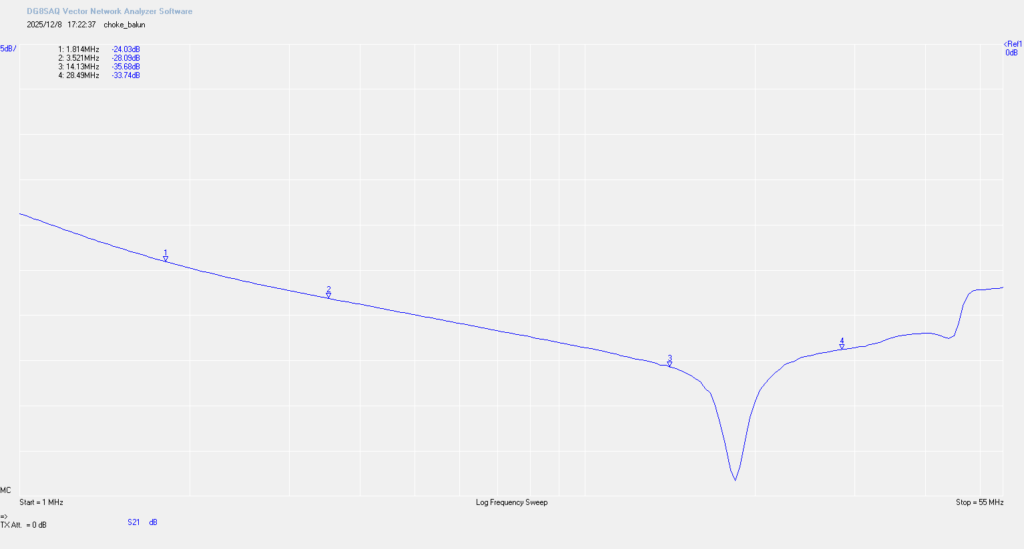
The author of the 3D model suggests 11-turn RG58 coax coiled on a FT-240-43 toroid core. This will definitely provide a huge amount of choking impedance, especially on the lower HF bands. The 43# ferrite core has an initial permeability (ui = 800) and is excellent for the 40-meter band (7 MHz) up through the 10-meter band (28 MHz). 11 turns is a significantly high number of turns. This high number of turns ensures the choking impedance at the lowest frequency (3.5 MHz) will be extremely high—likely over 1,000 ohms—making the choke exceptionally effective on 80 and 40 meters. You could see G3TXQ’s measurements on his website, the reactance measured on a choke balun made from FT-240-43 ferrite core with 12-turn windings of RG-58 coax.
Project Files:
https://drive.google.com/file/d/15RFGf8UTfeWoOGzPVzRkFLkiORU5yBr2/view?usp=sharing