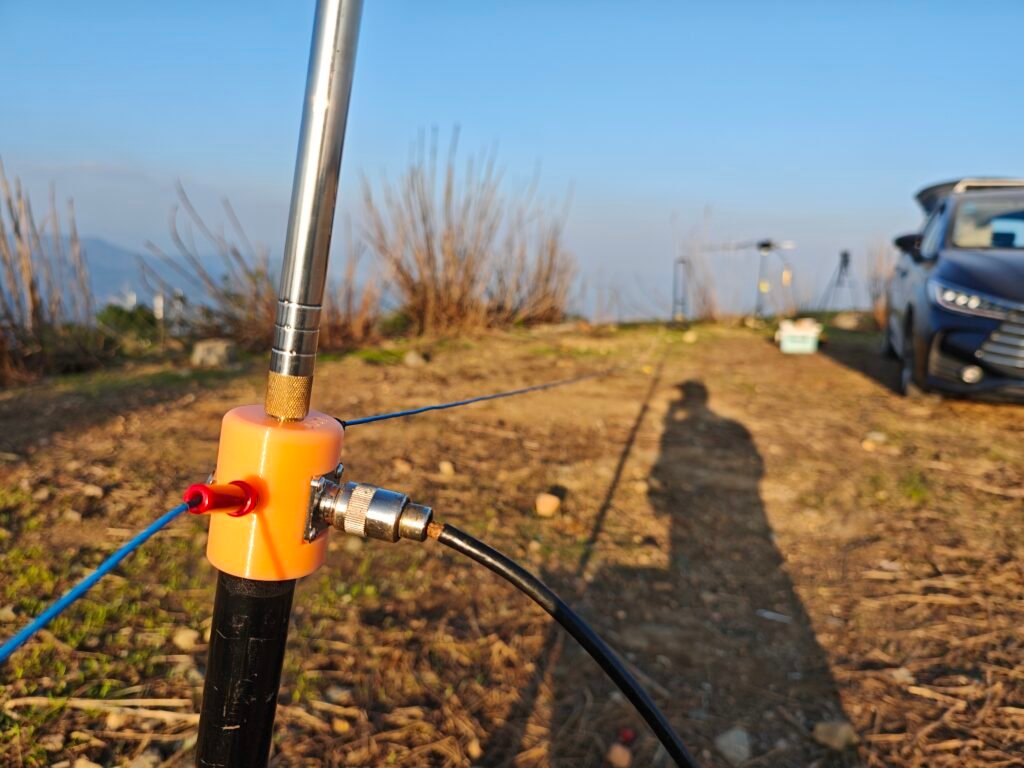
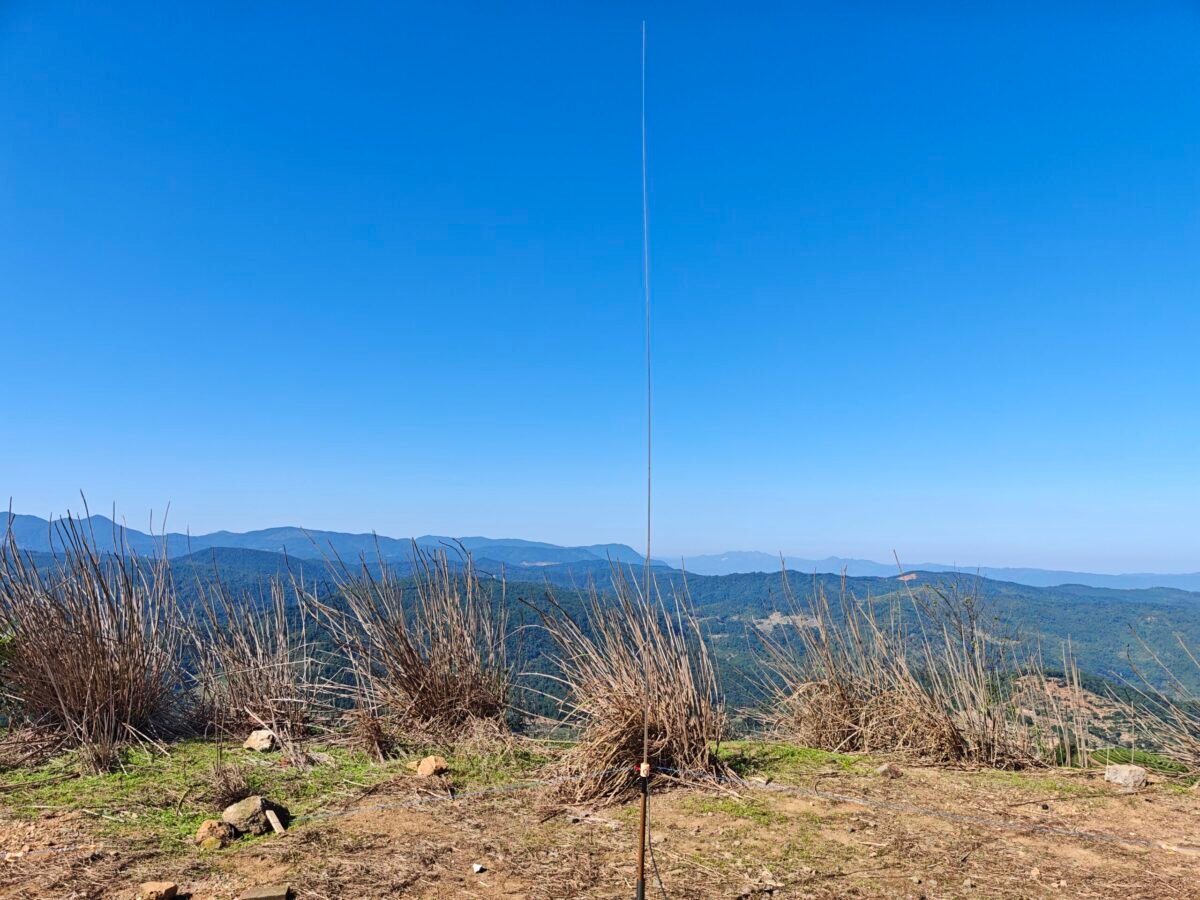
When doing POTA or SOTA activations, I prefer the vertical antennas. That says I don’t have to bring a long enough antenna mast that could support my wire antennas. For example, an end-fed, it’s a good antenna, but you need a pole or a tree to set it up, in horizontal, vertical or in V-Shape configuration, I do have a 12m-telescopic fibre-glass mast, but it weighs 3kg and lengths 1.4m when fully collapsed. It could be tedious to bring it with when doing radio hiking.
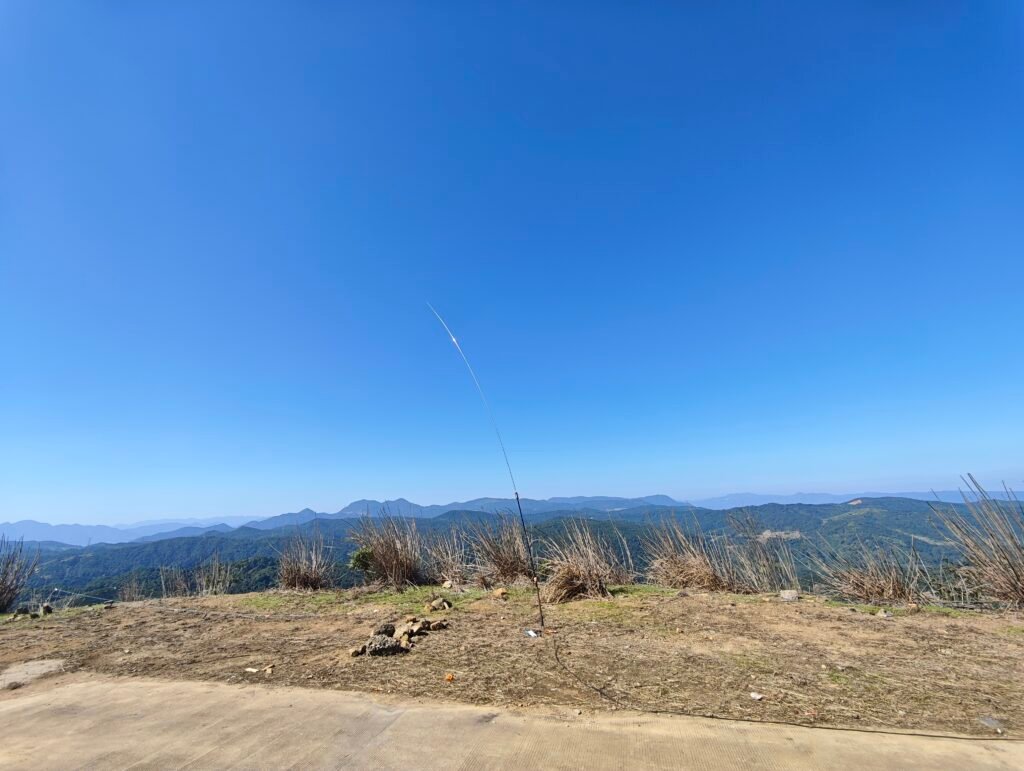
A vertical antenna made of telescopic whip could be in a very different scenario, it’s light-weight and short, moreover, it could be very easily fit into your backpack. The antenna goes without a mast, it’s self-supported by a ground spike. I have got a 5.6m whip, it works perfectly on 20m band when it’s fully extended. So I’d like to build a vertical antenna based on this 5.6m whip. I came across a 3d printable antenna base on makerworld.com. Before starting to build this antenna, I’d like to share my views on the radials or counterpoises.
1. Why Ground-Elevated, not Ground-Mounted?
Because they achieve higher efficiency with far fewer radials and avoid heavy signal loss from poor RF conductivity of the earth. When doing POTA or SOTA, most of the scenarios, the ground is less ideal, which has poor RF conductivity, except you are near the salty water, on the wet beach where the sand has been saturated by it.
The core reasons for ground-elevated radials’ higher efficiency are as follows:
- Minimize capacitive loss: Elevating radials even a few inches off the ground drastically reduces capacitive coupling to the lossy soil (earth is a poor RF conductor), which is a major source of signal loss for ground-mounted systems.
- Fewer radials, higher efficiency: Ground-elevated systems need only 2 resonant (0.25 wavelength) radials to reach over 90% efficiency, while ground-mounted systems require 120 radials to match this efficiency.
- Less interference: Elevated radials are “in the clear” and less affected by surrounding objects (like trees), which reduces signal attenuation compared to ground-mounted radials that are easily disturbed by nearby items.
- Better low-angle radiation: Though far-field losses can’t be eliminated, elevated setups (especially near saltwater) maintain more effective low-angle radiation for long-distance communication, unlike ground-mounted systems that suffer more from soil-related signal degradation.
2. Parts needed for the antenna base
| Name | Purpose | Quantity |
| 3d printed antenna base | —– | 1 |
| SO239 connector | —– | 1 |
| 4mm banana socket | 4 | |
| M10 x 15 brass insert nuts | —– | 2 |
| M3 x 6 brass inert nuts | —– | 4 |
| M3 x 8 screws | —– | 4 |
| 1.0mm x 40mm copper wires | Connect to so239(ground) | 4 |
| 2mm x 40mm stranded wire | Connect to so239(central pin) | 1 |
| 1mm x 40mm stranded wire | Connect to so239(ground) | 1 |
| Copper ring lug | —– | 4 |
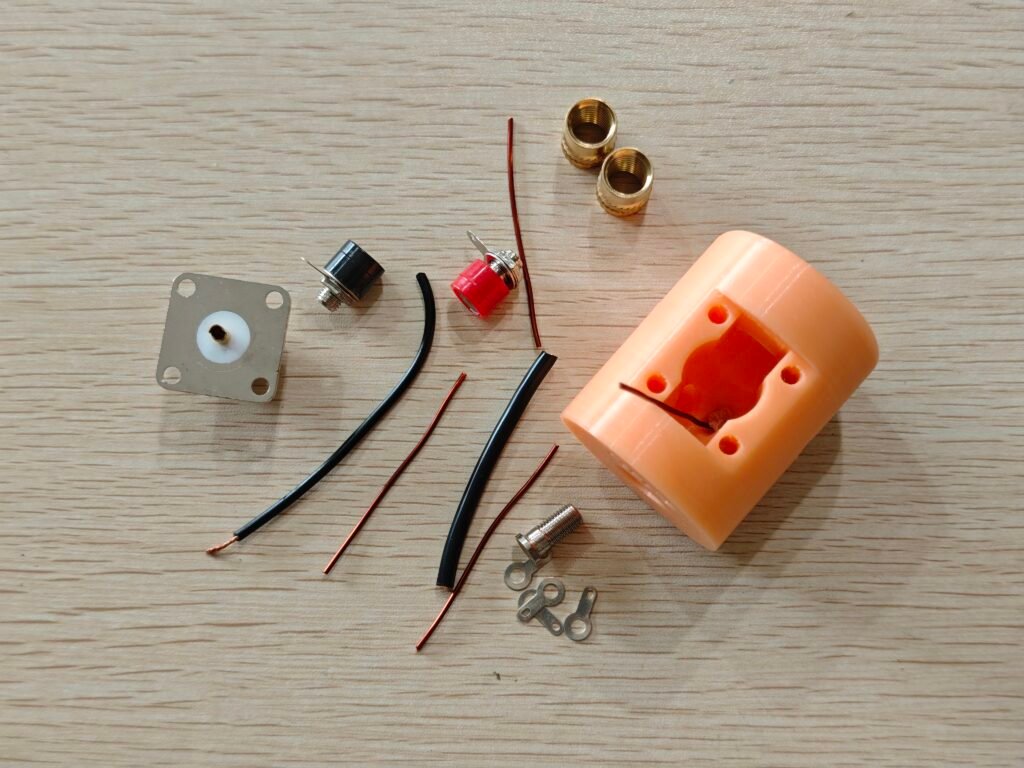
3. Antenna base assembly
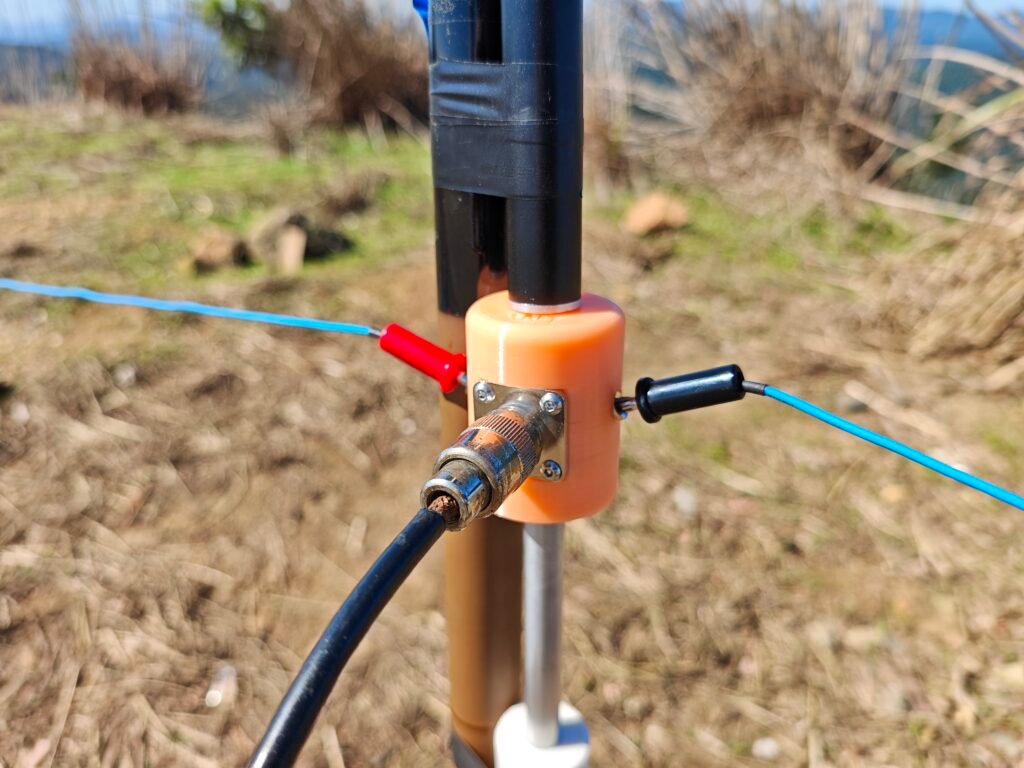
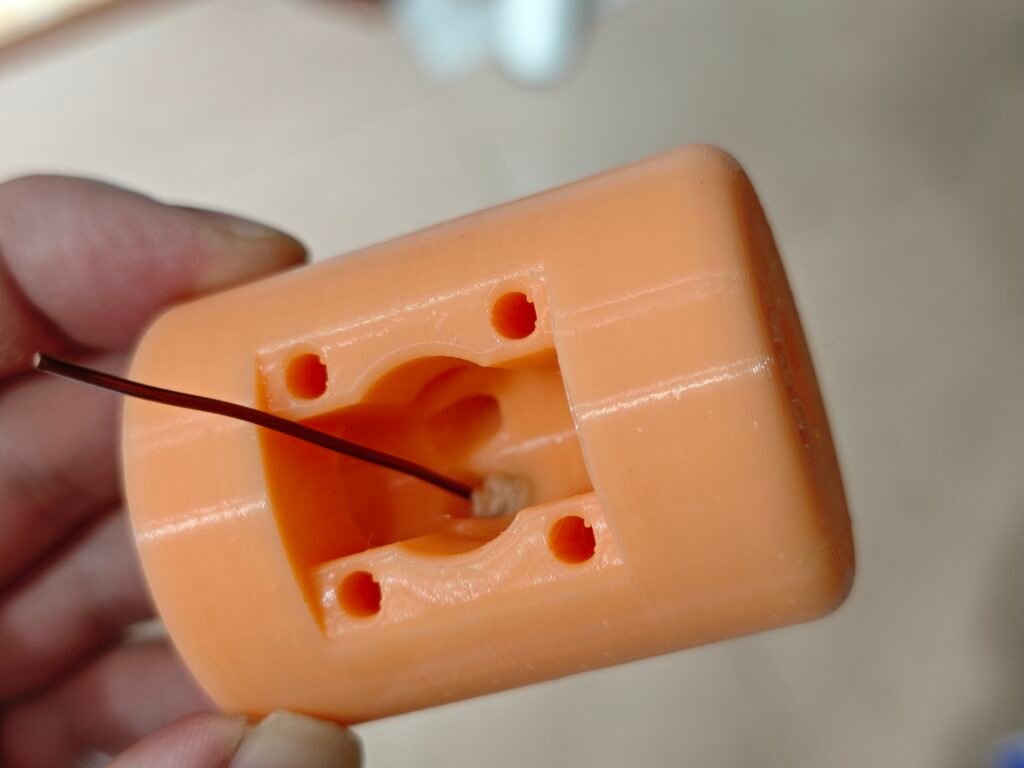
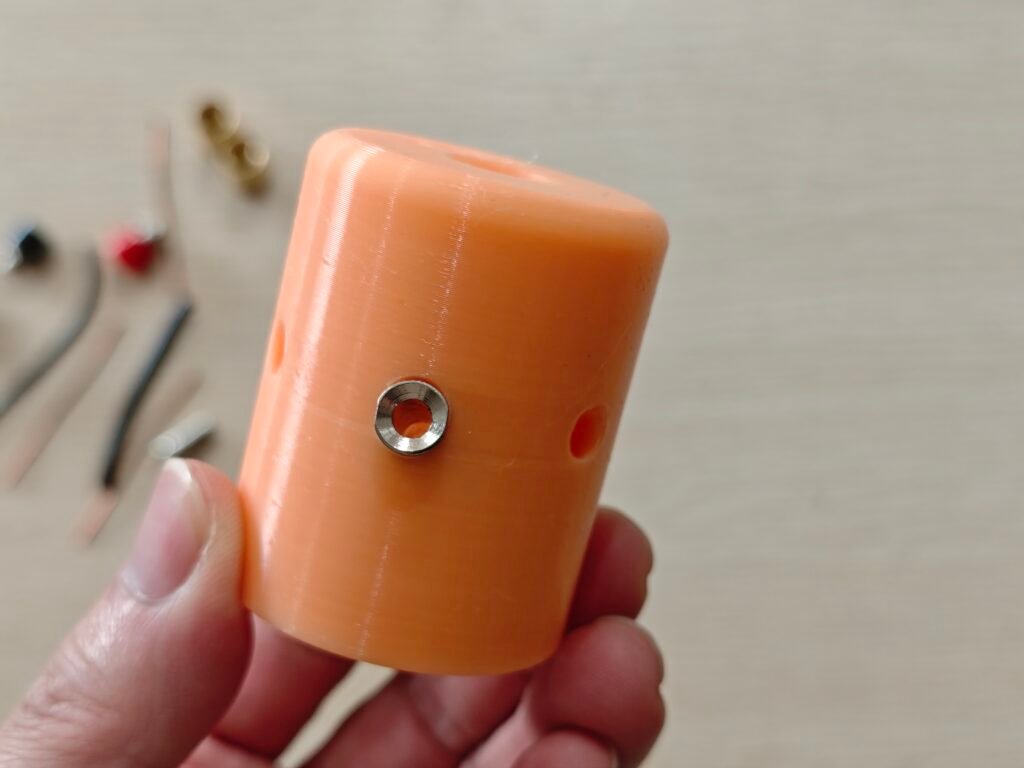
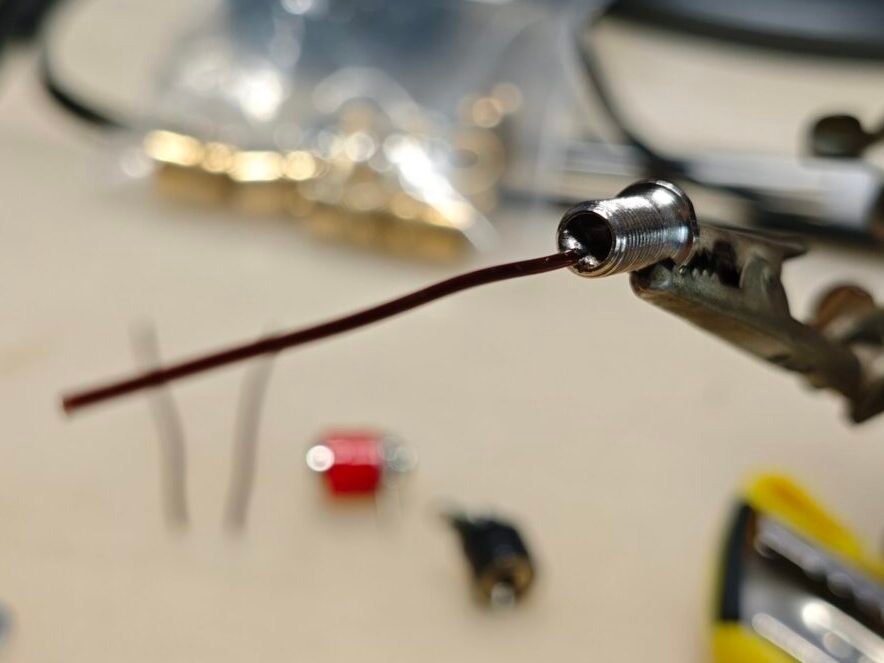
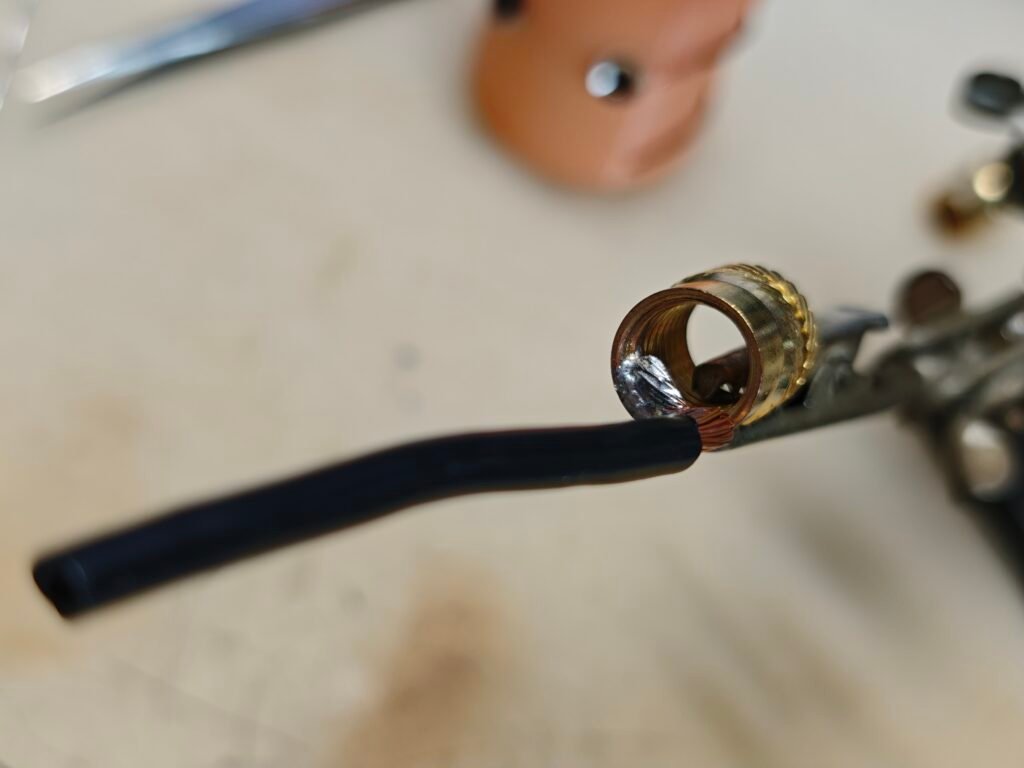
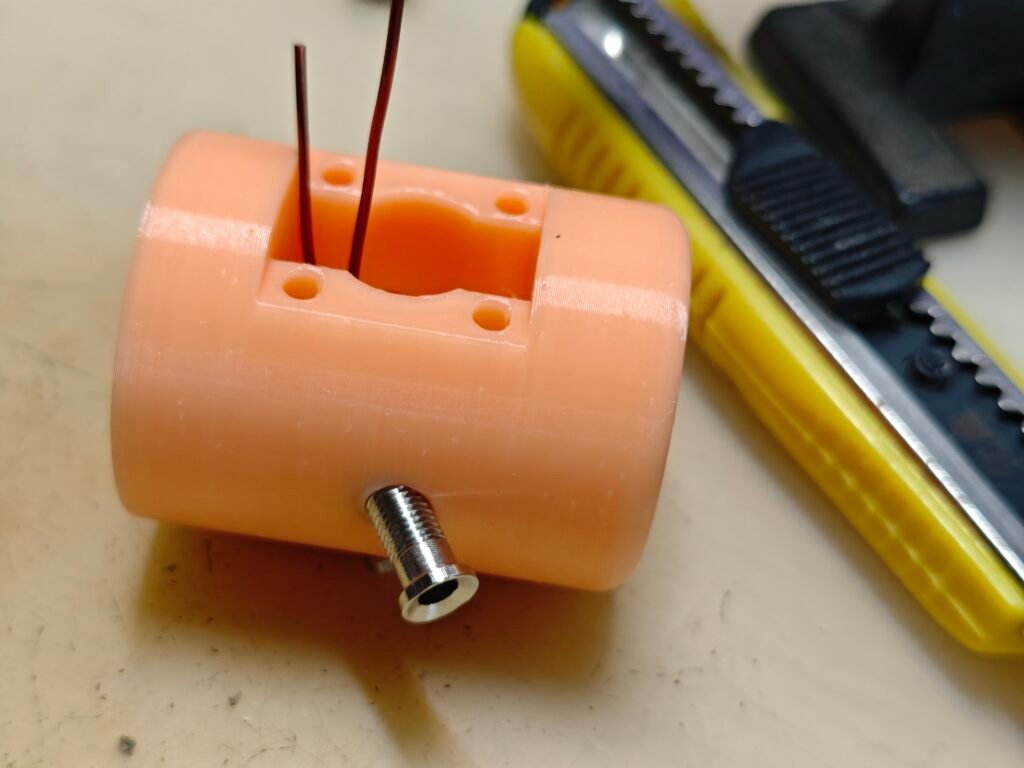
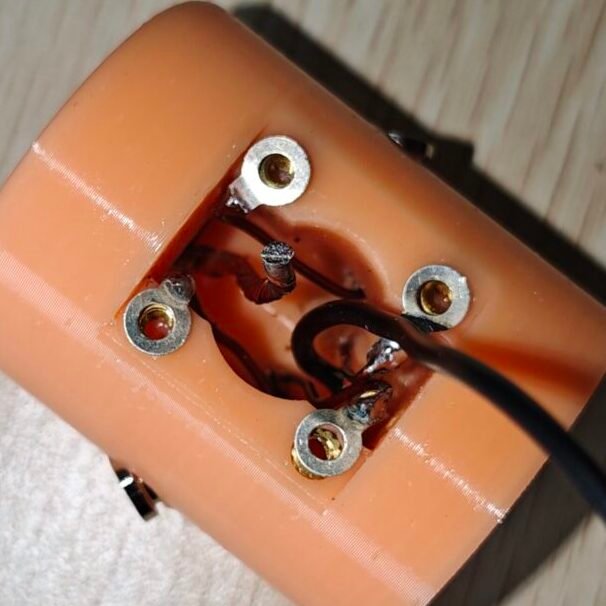
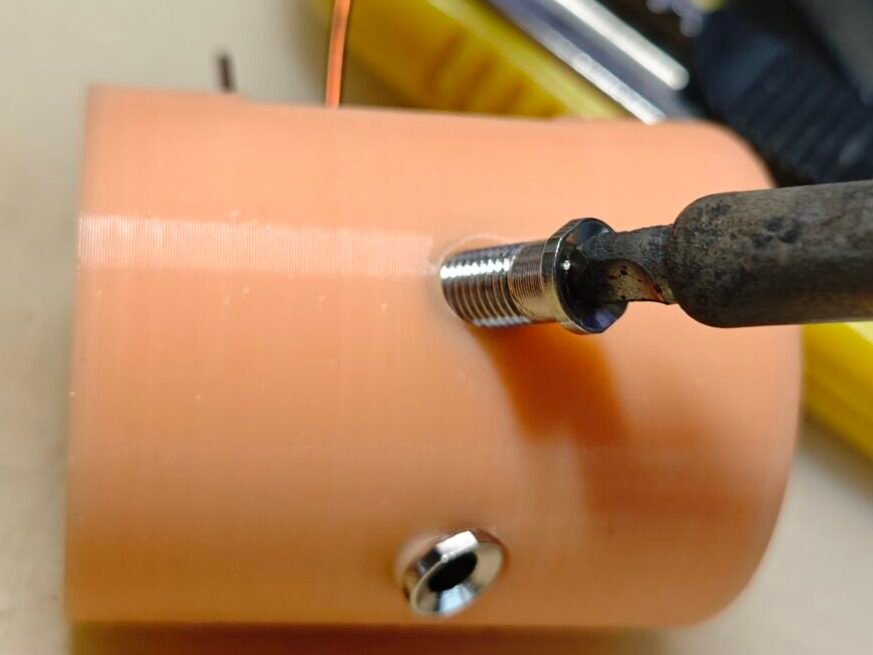
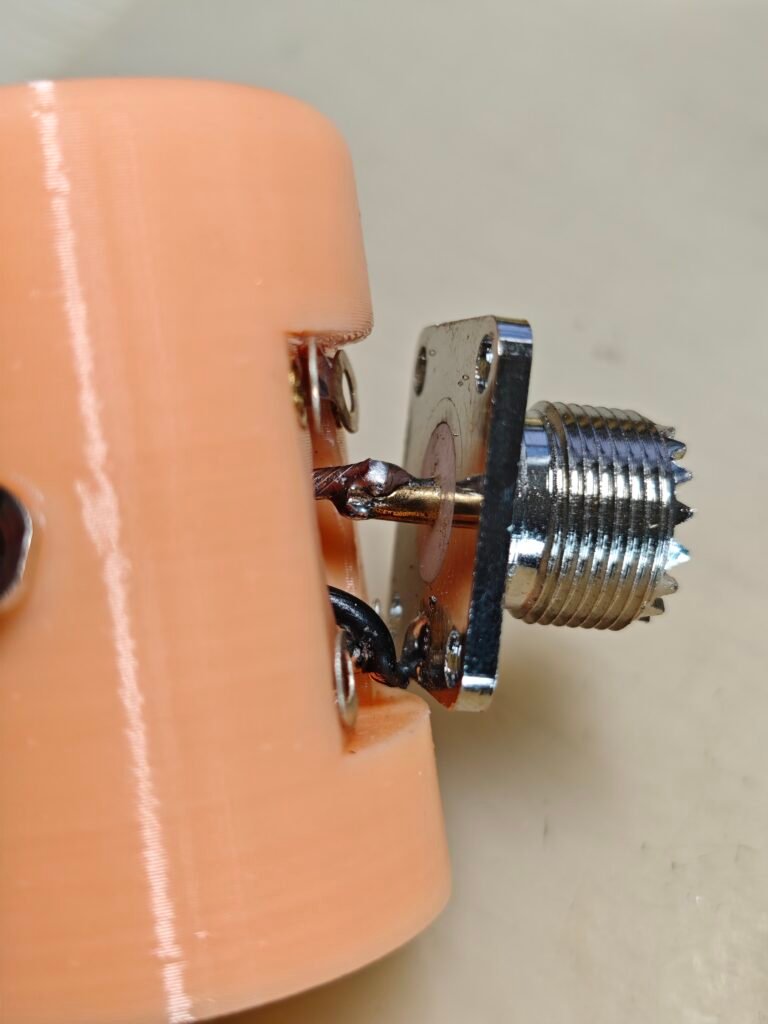
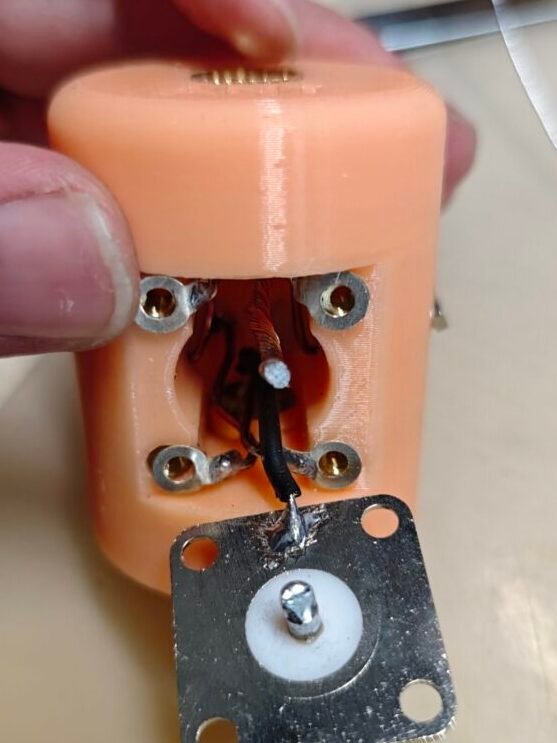
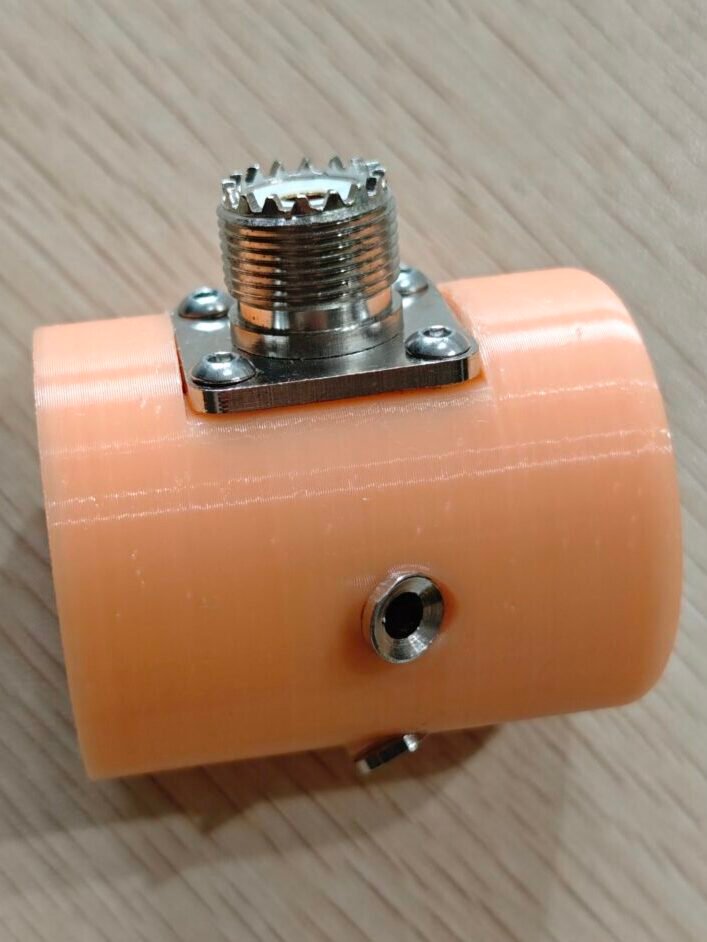
It did take some time to have the antenna base fully assembled with those prepared parts. First, I precut some short pieces of wires and soldered them onto the banana socket and the M10 brass nuts(for the antenna whip and ground), after that I used the solder iron to implant those banana sockets and M10 nuts into the holes on the antenna base. Pre-soldering the wires onto the sockets is important, as you are not able to solder the wires on them once the nuts and sockets are implanted. Four lug rings were soldered to the 4 copper wires connected to banana jacks. They were put right onto the four holes that were used to secure the SO239 connector, where four M3 insert nuts were implanted in advance. Finally, I soldered the wire from the M10 nut(for whip) onto the central pin of the SO239 connector, also the wire (gnd) from the other nut directly onto the flange of SO239 connector. See the picture below.
4. About the ground stake
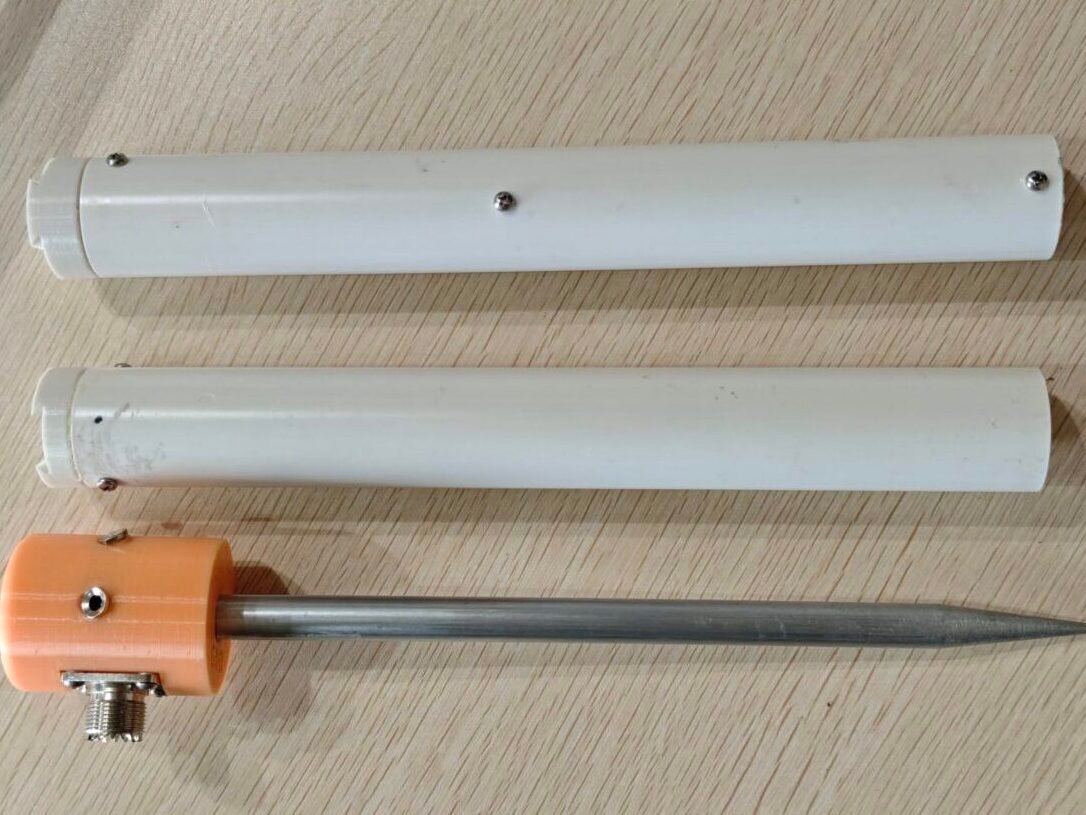
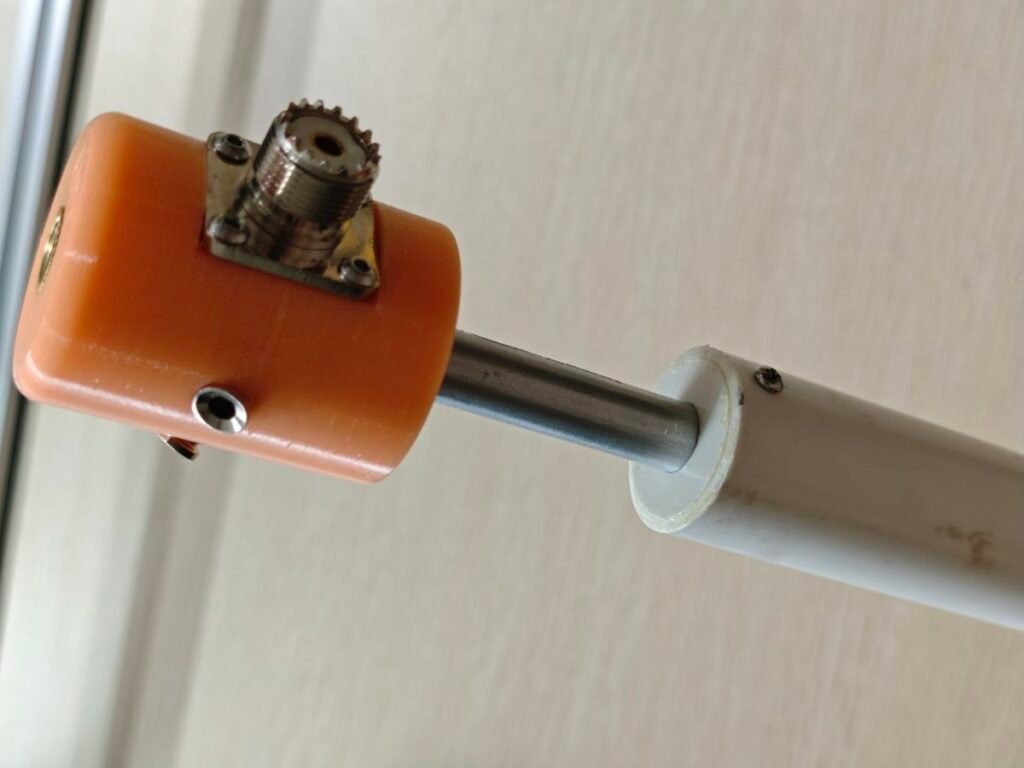
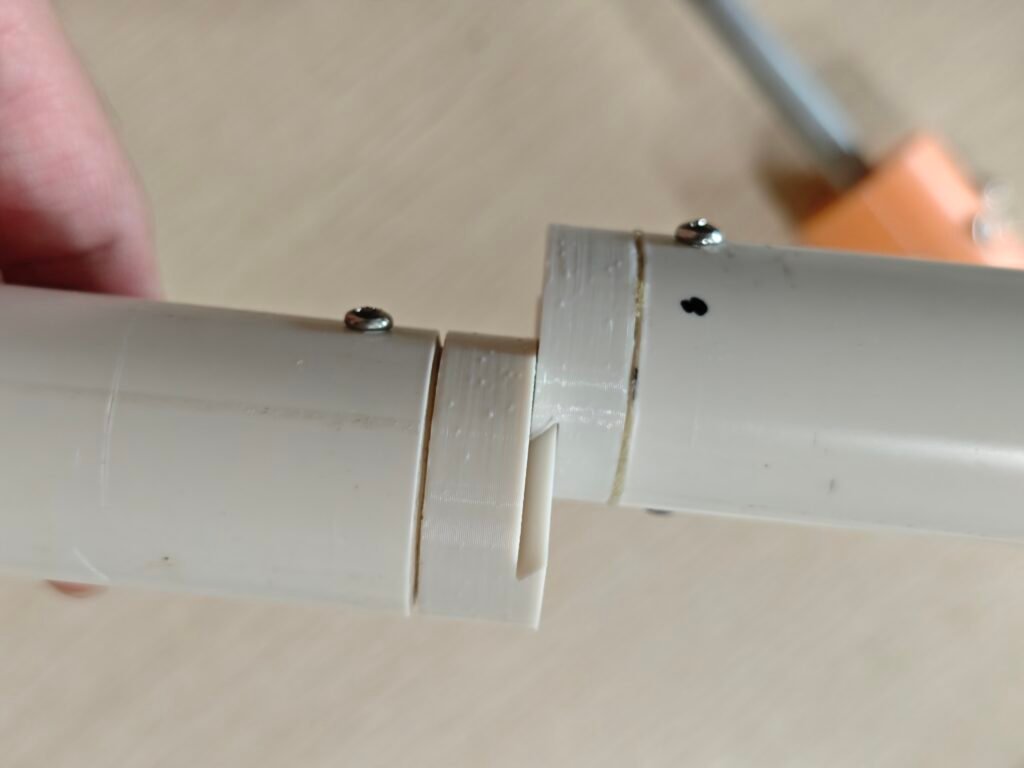
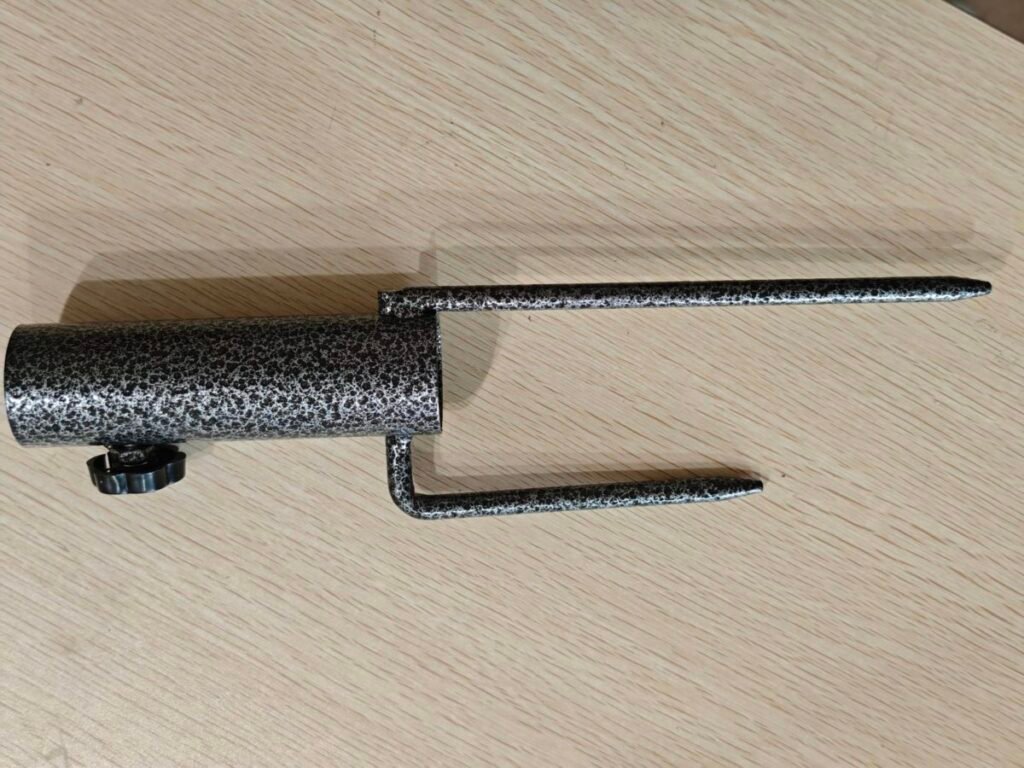
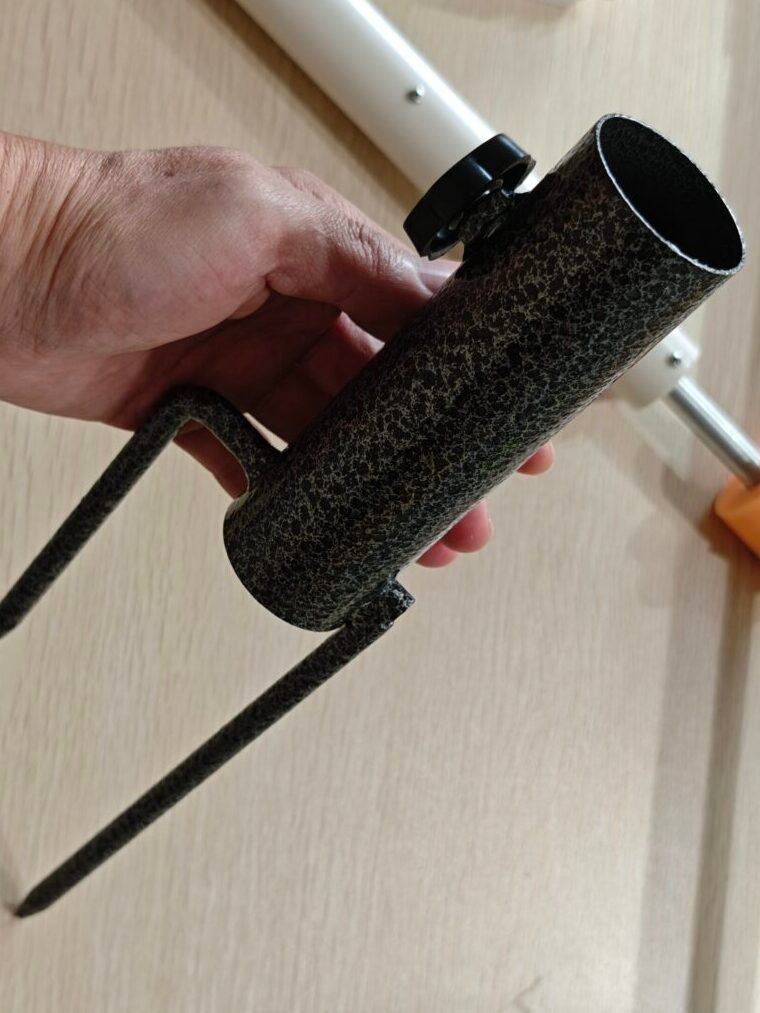
I used two pieces of PVC tubes (32mm diameter) for supporting the antenna. I designed two 3D printable parts to join the PVC tubes. The ground spike from the antenna base could be inserted to one tube, then you could connect the two tubes together by sliding into each other. A ground spike will then be used to hold the PVC tube in the upright position.
5. About the radials
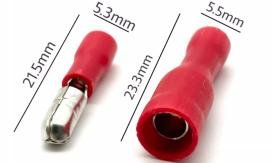
I want the antenna could be tuned to any band from 40m (loading coil needed) to 10m, but for a ground elevated vertical, the radial should be exactly a quarter wave length, so I have to cut radials of different lengths for all these bands. Each band has two radials in 180 degrees apart from each other. They are 7(bands) x 2 = 14 radials in total, so many radials, it’s not good for such a portable antenna. So, why not a linked radial? It’s just like a switch, you can switch the specific radial on when needed. If you link all of the radials together, you will get a full length radial for the 40m band. I cut all of these radials, and linked them together by bullet crimp connector, see the picture below.
Below is calculated radial length for each specific band:
| Band(meter) | Length(meter) |
| 40 | 10.63 |
| 30 | 7.41 |
| 20 | 5.3 |
| 17 | 4.14 |
| 15 | 3.54 |
| 12 | 3.0 |
| 10 | 2.65 |
So, the configuration will be as the following, the total length is 10.63m.

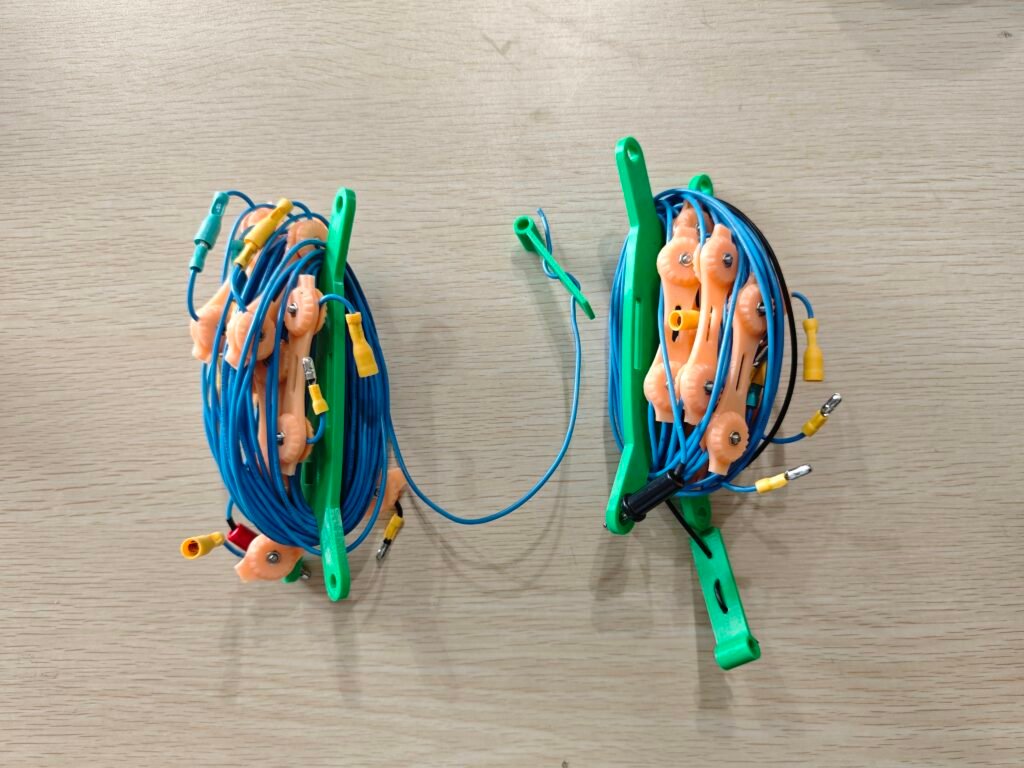
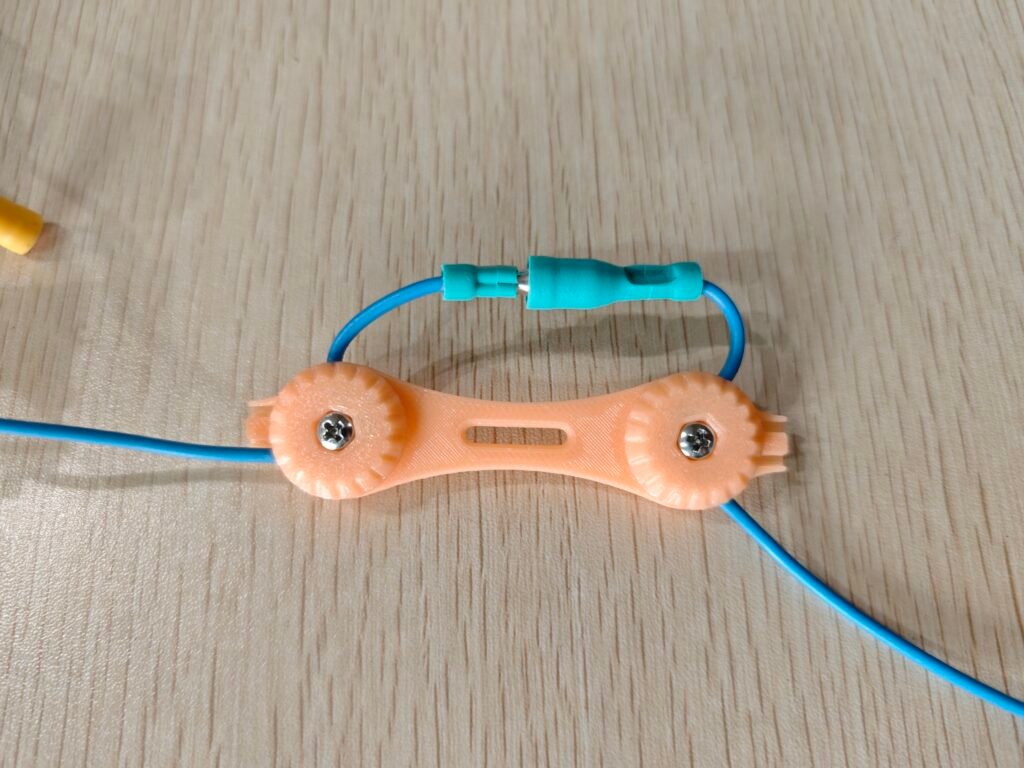
As you could see, 3d printed(with M3x10 screws and M3 nuts) links was used to separate wire sections. The wire sections might have to be cut or trimmed a little bit during the field test.
6. Final field testing
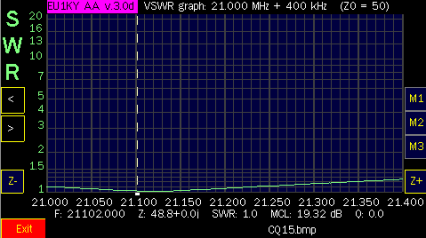
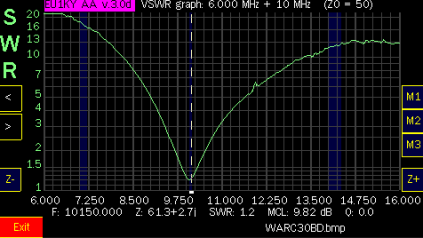
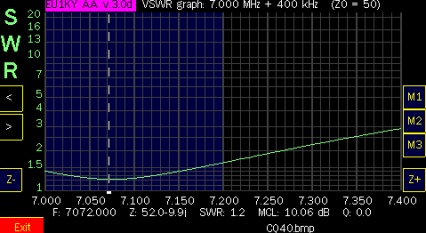
The test results are quite satisfactory, with the SWR values below 1.5 and very good bandwidth on all amateur bands. For 30m and 40m bands, I extended the length of the radiator by using 4 aluminum rods from the JPC-12 antenna kit, as they also use the M10 threads, including the loading coil. So the total length of the radiator on 30m and 40m bands is 5.6m + 1.2m = 6.8m. The coil was tapped at the 4th turn from the top on 30m band, while the 14th turn on 40m band.
You may only need the loading coil to make the antenna work on 30m and 40m bands, but with the base loading configuration, the total efficiency of the antenna goes down significantly compared to the central loading setup. Meanwhile, the added 1.2m extra length will no doubt improve its efficiency overall.