No WiFi? No Problem—ESP32 IoT Data Still Travels Far & Fast
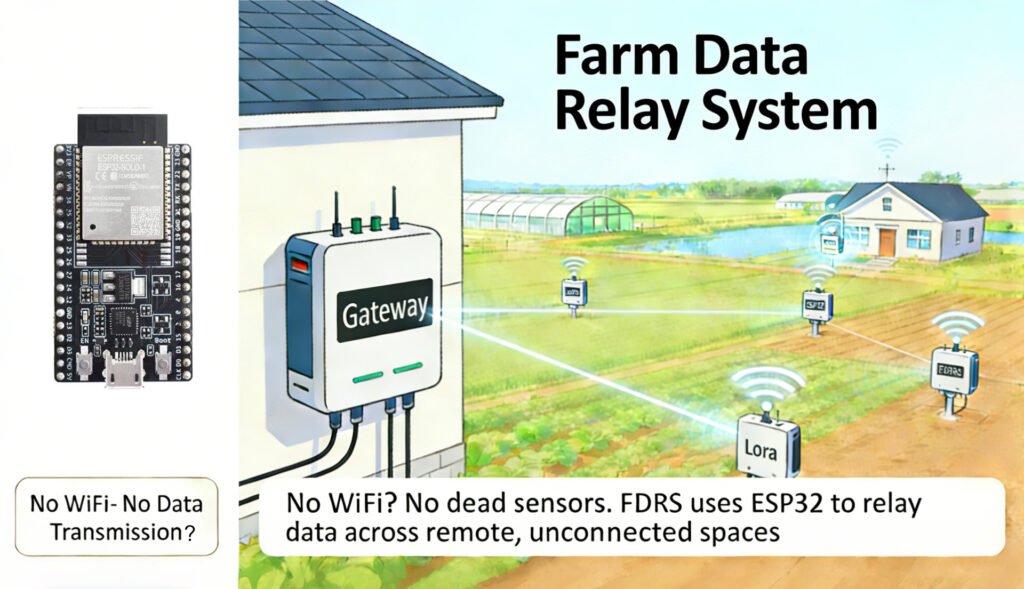
If you’ve tried to use an ESP32 IoT sensor in a remote area with no WiFi and Internet, you’ve probably run into the same problem. Maybe you want to check temperatures in a greenhouse, watch water levels in a distant pond, or record soil moisture over a large field.
Most simple ESP32 IoT projects rely on WiFi connection, but that doesn’t work in areas with no WiFi and Internet access. Running Ethernet cables is expensive, 4G modules use a lot of battery and add monthly fees are pricy, and LoRaWAN gateways are hard to find and not cheap. Your hardware works fine, but you can’t send your sensor data to where you need it.
The Farm Data Relay System (FDRS) is a free, open-source Arduino project made for ESP32 boards that fixes this issue. It lets you build a low-cost, low-power wireless ESP32 data relay network from the ground up, with no existing WiFi or cell service needed. It acts as a simple wireless path to move your remote IoT data to somewhere it needs to go.
What Exactly Is the Farm Data Relay System (FDRS)?
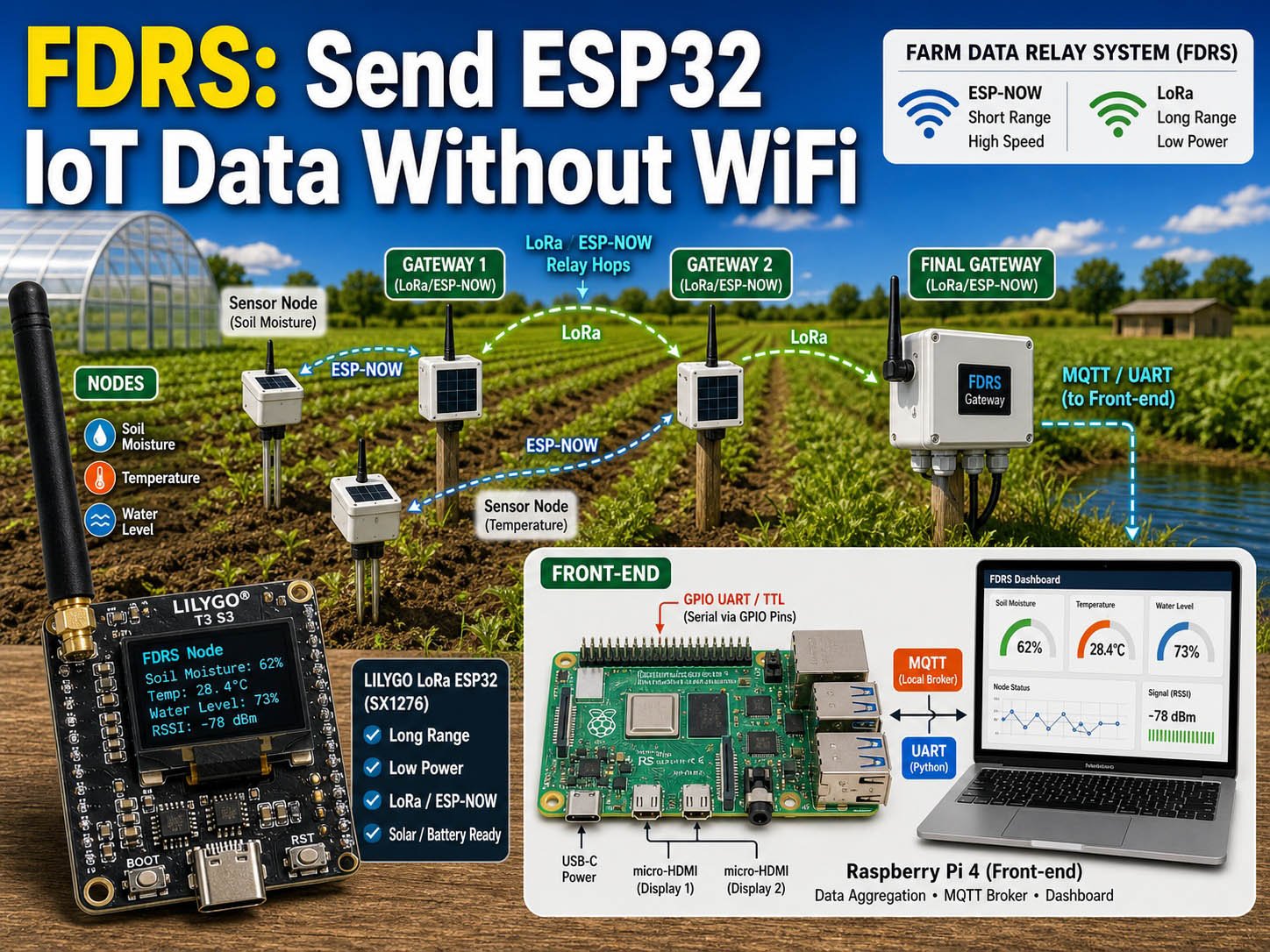
FDRS isn’t like some overpriced commercial kit—it’s a DIY ESP32 long-range data network that leverages two best wireless connections: ESP-NOW (ultra-fast, low-latency peer-to-peer wireless) and LoRa (long-distance, low-power radio). Together, they build a multi-hop relay chain that passes data from one device to the next, like a bucket brigade for your IoT sensor data.
Here’s the breakdown: instead of relying on a central router or cell tower, you place tiny, cheap ESP32 sensor or controller nodes (think mini data hubs) across your property. Data hops from one hub to the next, until it reaches a final gateway that sends it to a laptop, raspberry Pi, or custom dashboard. No fancy infrastructure, no monthly bills, just affordable ESP32 hardware doing the message relaying.
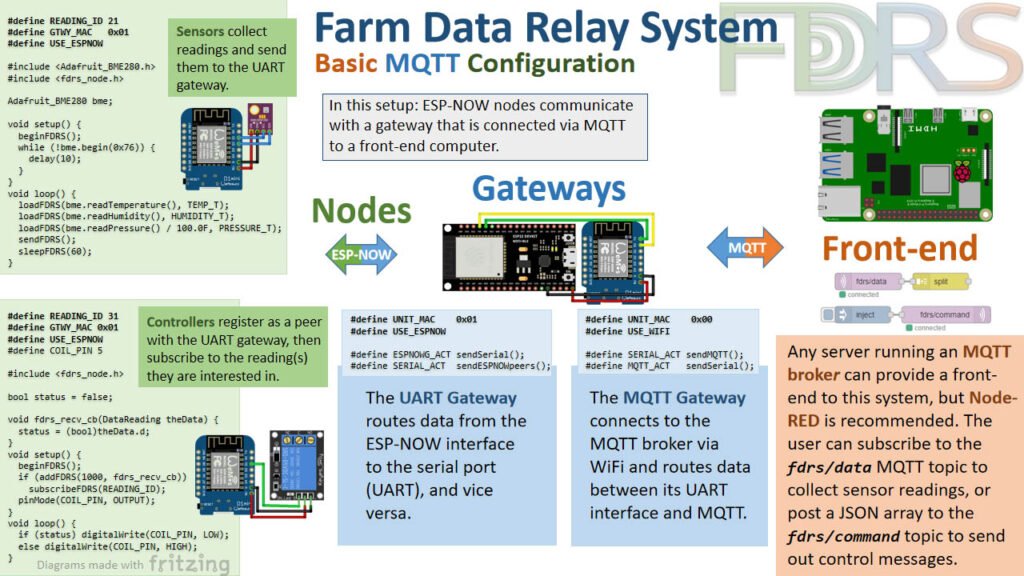
The 2 Core Parts of FDRS (Super Easy to Grasp)
You don’t have to be an expert to run this system—it’s built with two clear, simple roles, and understanding them is all you need for launching your own ESP32 no-WiFi IoT network:
1. Gateways (The Network Backbone)
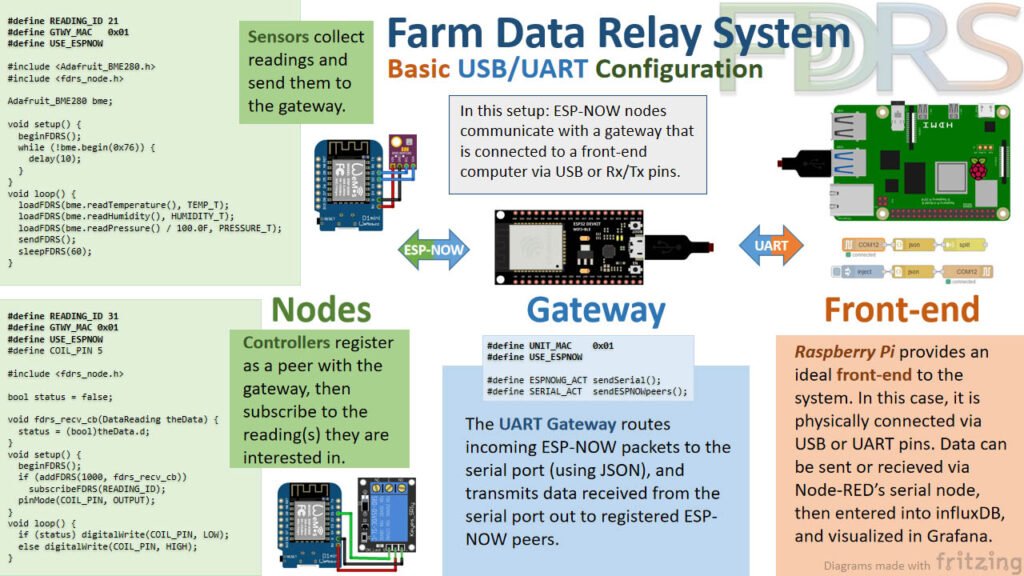
Gateways are the “traffic cops” of your ESP32 data relay network. They pass data seamlessly between ESP-NOW, LoRa, and even serial connections, meanwhile, it sends the data to a raspberry Pi or other cloud servers. Each gateway gets a unique 8-bit address, just like a house number, so data never gets lost.
2. Nodes (The Workhorses)
These are the workhorses of your FDRS setup, and they come in two super practical flavors:
- Sensor Nodes: Grab real-world data—temperature, humidity, soil moisture, light, or water quality—and shoot it to the closest gateway via ESP-NOW or LoRa.
- Controller Nodes: Listen for commands from the FDRS relay network and trigger actions—like flipping on a water pump, opening a valve, or powering up a grow light.
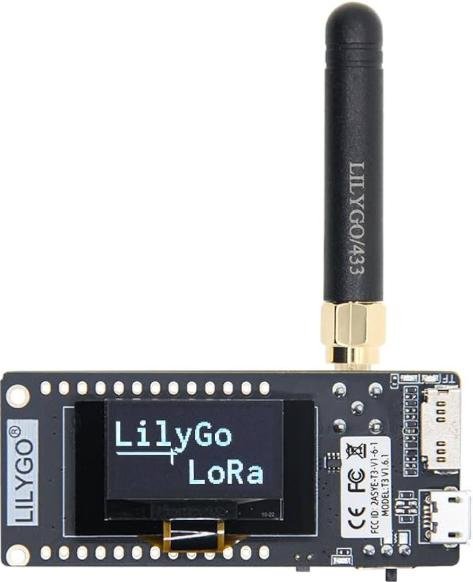
Launch Your Own FDRS
The creator built a full, ready-to-use code framework, and it’s so easy to get started. Getting your first ESP32 no-WiFi IoT network up and running is totally straightforward:
- Install the FDRS Library: Clone the official FDRS GitHub repo and drop it into your Arduino libraries folder—no complicated setup required.
- Tweak Global Settings: Edit one main config file to add WiFi credentials (only for the final gateway), MQTT server details, and your radio preferences (ESP-NOW/LoRa).
- Flash Example Code: Start with pre-written sketches to test your network first:
- UART Gateway: Listen for ESP-NOW data and print it straight to your computer’s serial monitor—instant proof your data is transferring.
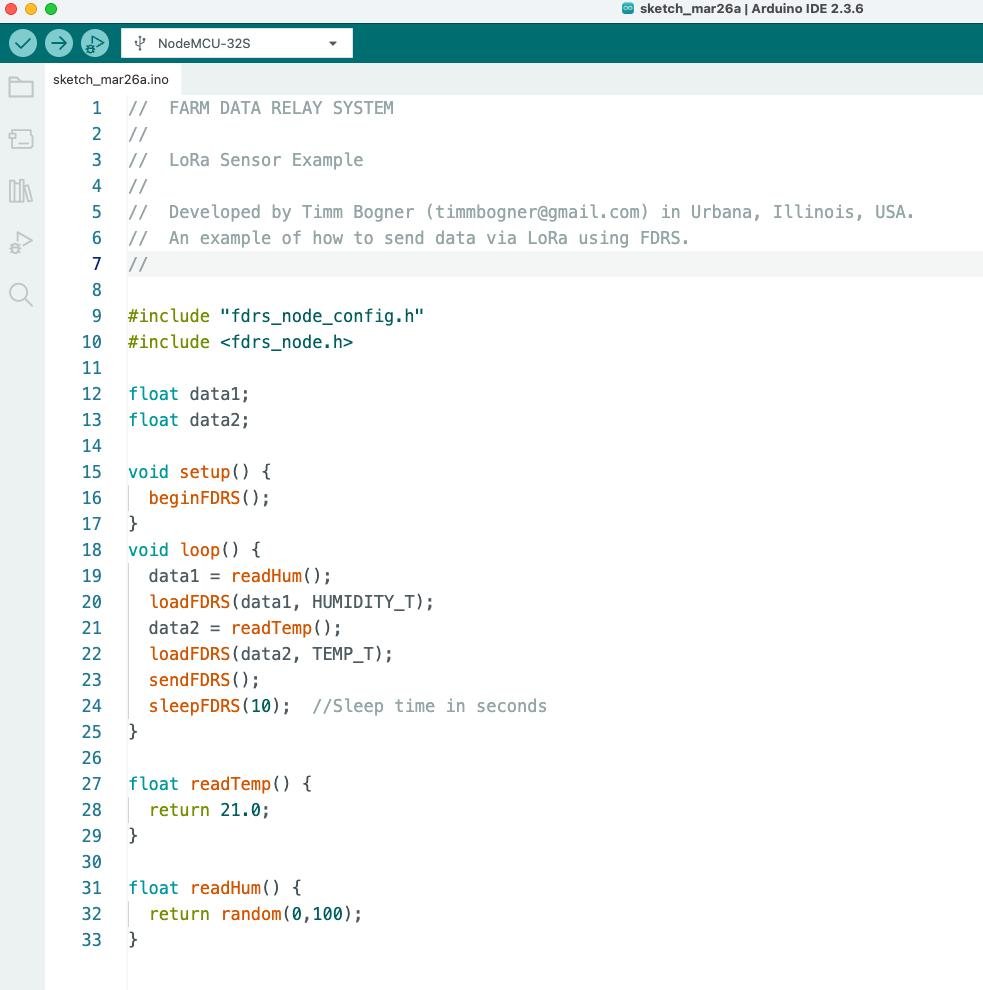
- ESP-NOW Sensor Node: Change the code to match your sensor model, and start transmitting data to the nearest gateway.
- MQTT Gateway: Use this to send relayed IoT data to the cloud (EMQX, Node-RED, and Home Assistant seamlessly).
PROs & CONs of FDRS
PROs
- Ideal for remote farm monitoring, greenhouse sensing and large-field data logging
- Supports low-budget ESP32 IoT projects with no WiFi available
- Works with low-power, battery-run setups for off-grid remote locations
- Uses low-cost ESP32 hardware with no paid infrastructure or monthly fees
- Gives DIY makers and researchers full control over IoT data transmission
CONs
- Requires basic network layout planning: each relay gateway must stay within radio range of the next to keep ESP32 IoT data relay running smoothly
- Power failure of one gateway may disconnect downstream nodes; additional backup power is recommended for critical remote ESP32 IoT setups
- Debugging this self-organized relay network takes more patience than a standard WiFi-connected ESP32 IoT project
Where Does Your FDRS IoT Data End Up?
Once your data hops through the FDRS ESP32 relay network, you can route it anywhere you want. The creator recommends Node-RED for easy data routing and logic, paired with InfluxDB + Grafana to store readings and build clean, real-time dashboards. If you want something simpler, just use a laptop serial monitor or a quick Python script to parse your remote ESP32 IoT sensor data.
Final Thought: Take Charge of Your Remote ESP32 IoT Data
The Farm Data Relay System (FDRS) isn’t a shiny commercial product—and that’s its biggest strength. It gives you the freedom to build a no-WiFi ESP32 data network that fits your space, budget, and project needs perfectly. No overpriced hardware, no recurring fees, no relying on existing wireless infrastructure for your ESP32 IoT projects.
For makers, farmers, and IoT hobbyists stuck with no WiFi and Internet in remote areas, this open-source ESP32 project is a game-changer. Spend a weekend testing it, and you’ll move ESP32 IoT sensor data across acres of remote land—no router required.
Project Link
https://www.github.com/timmbogner/Farm-Data-Relay-System