
AC vs. DC: What Is the Difference and How Can You Tell?
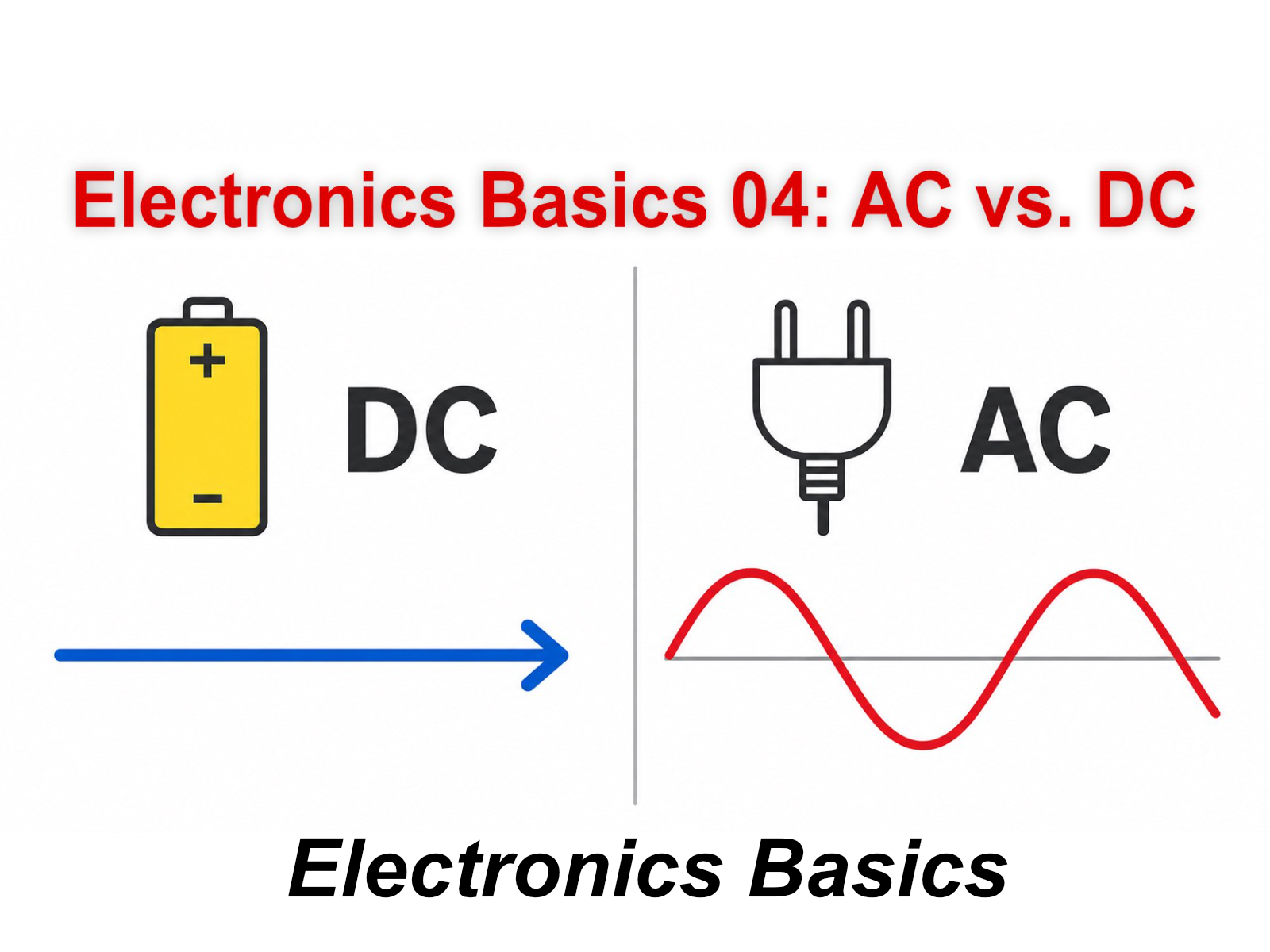
Simple comparison of a steady DC line and an alternating AC sine wave.

Welcome back to our Electronics Basics series. In the previous lesson, we explored voltage, current, and resistance. This lesson focuses on the two main forms of electric current you encounter every day: direct current (DC) and alternating current (AC). Their essential difference is direction. Conventional current in a DC circuit flows in one direction, while … Read more
Voltage, Current, and Resistance Explained with a Water-Pipe Analogy

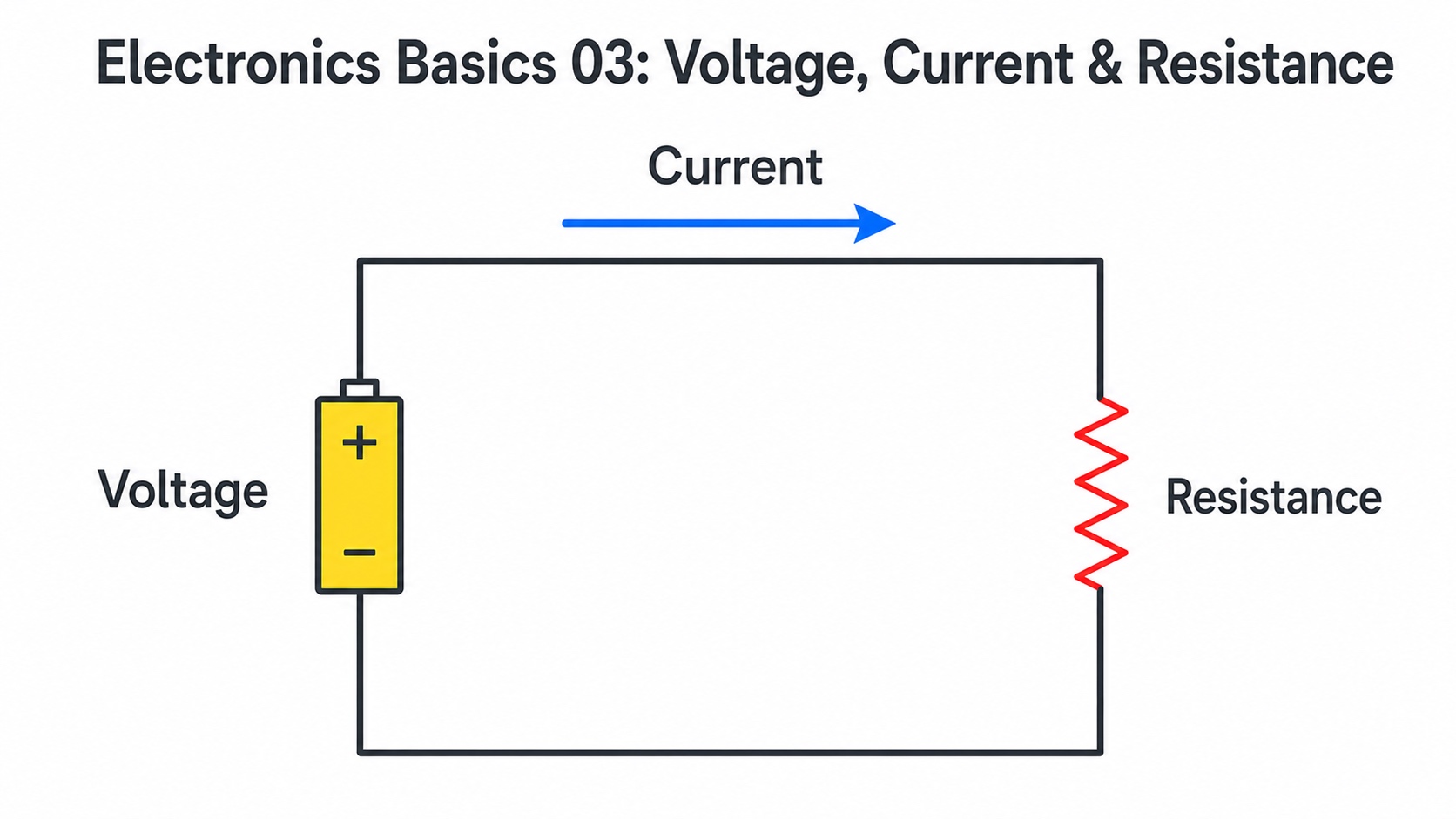
Simple circuit diagram identifying voltage, current, and resistance.

Welcome back to our Electronics Basics series. In the first two lessons, we learned about electrons, electric charge, static charge, and electric current. Now we will explore three fundamental electrical quantities—voltage, current, and resistance—and see how they work together. We will use a water-pipe analogy to make the ideas easier to visualize. Like any analogy, … Read more

What Is an Electron? From Atomic Structure to Electron Flow

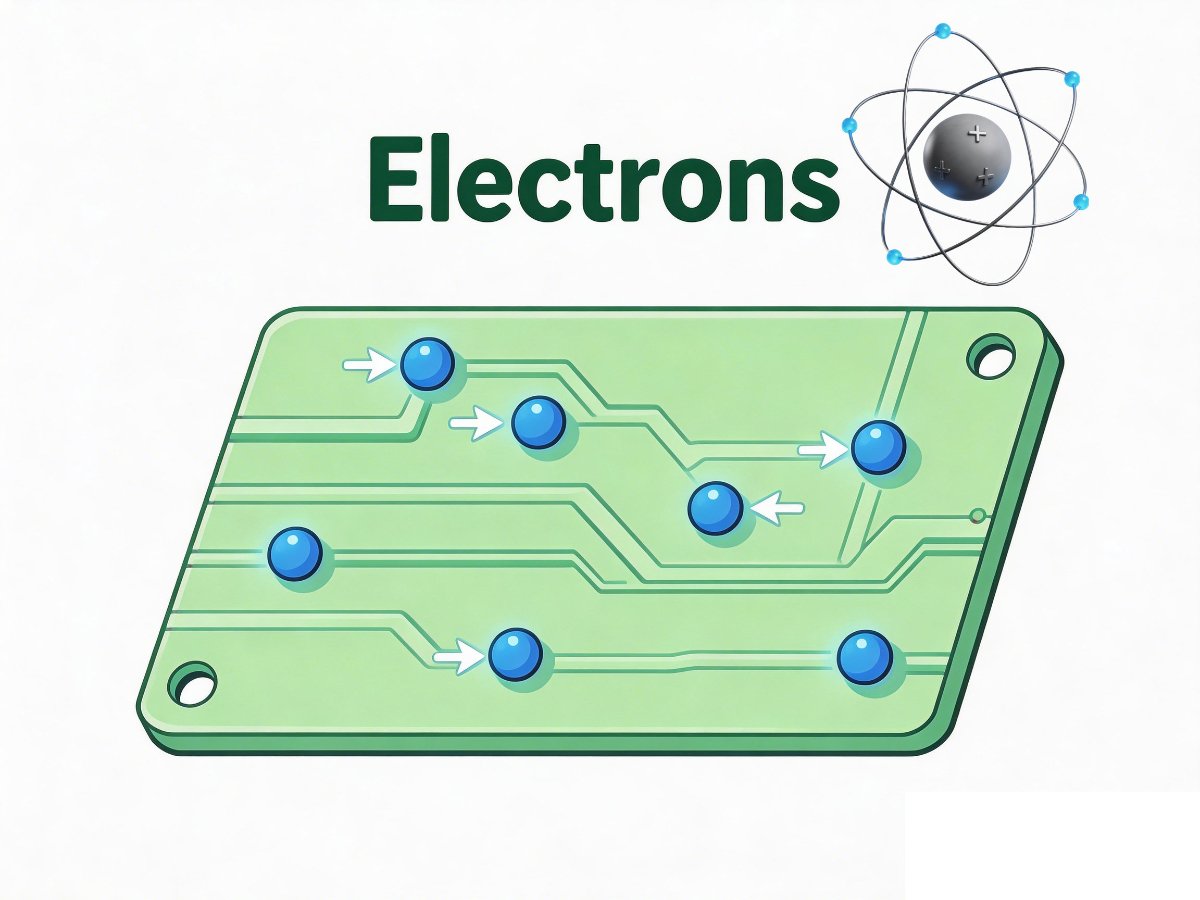
Illustration of glowing blue electrons moving through a circuit board with the title "Electronics Basics 01: What Is an Electron?"

Welcome to the first entry in our Electronics Basics series! To understand how your phone, computer, or even a simple flashlight works, you must first get to know the “star” of the show: the electron. Without the movement of these tiny particles, electronic technology as we know it simply would not exist. 1. Atomic Structure: … Read more