
Overview
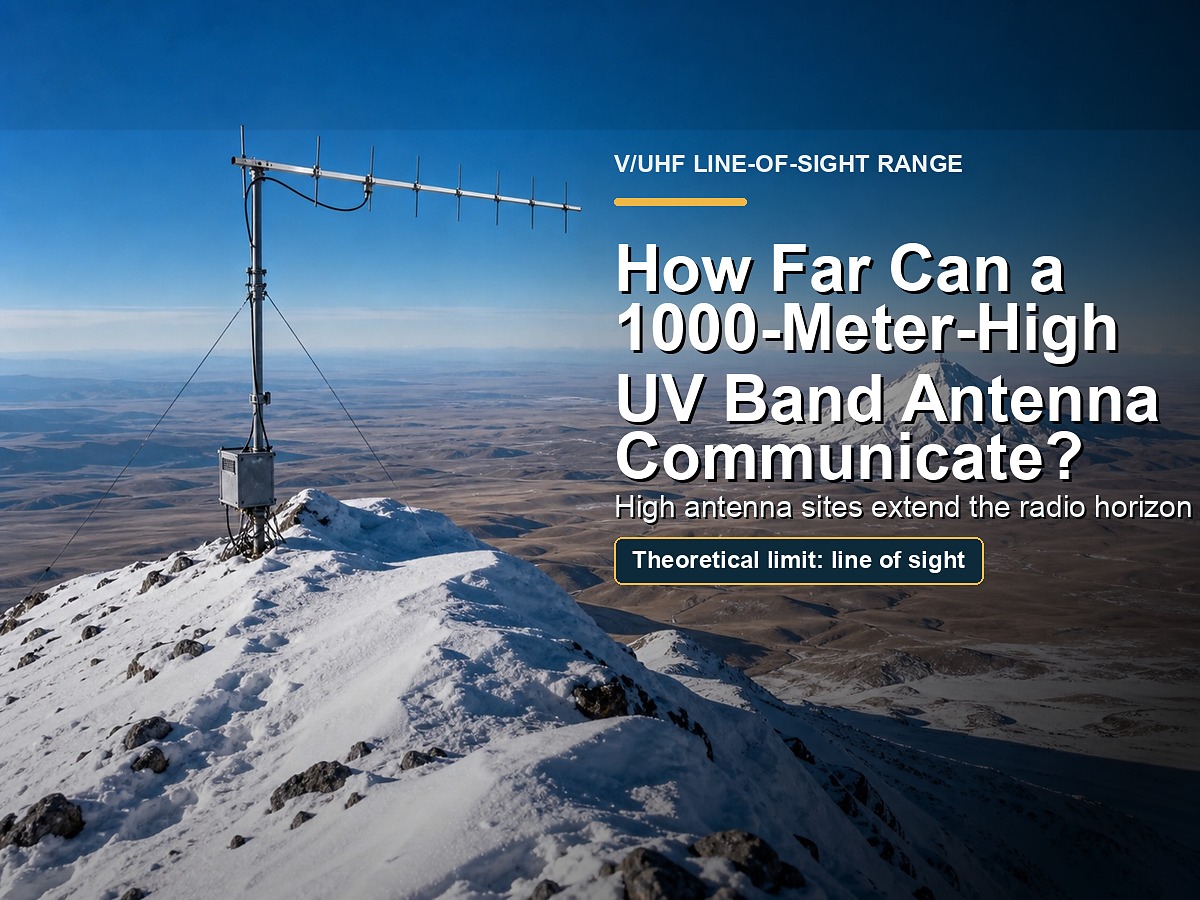
Have you ever wondered how far a UV band antenna could reach if it were mounted 1000 meters above the ground? It is a fascinating question for radio amateurs and technical hobbyists alike. Let us break down the science and look at what is practical in real operating conditions.
First, 1000 meters is no small height. In flat, low-lying areas, erecting an antenna at this height is practically impossible. The most realistic way to reach that elevation is to place the antenna on an isolated mountain peak, ideally a solitary summit rising sharply from a wide plain with no surrounding terrain blocking the signal path.
Assuming we mount a UV band, 144/430 MHz radio system on such a 1000-meter mountain, what communication range can we expect?
Line-of-Sight Is the Main Limit
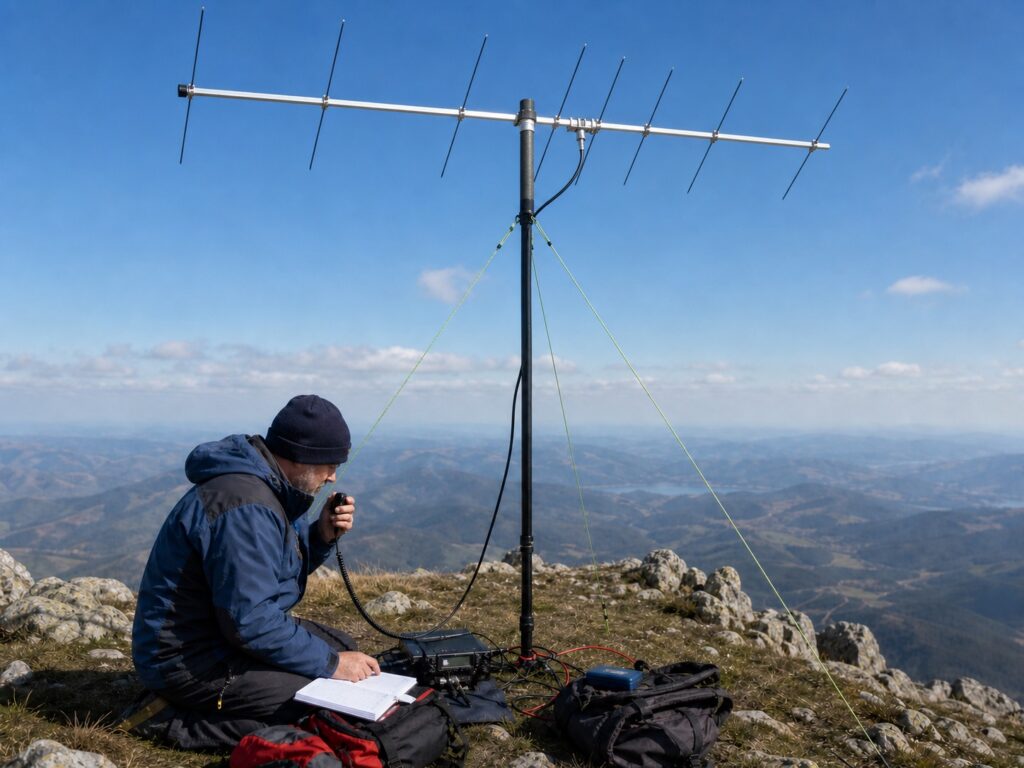
The key principle is line-of-sight propagation, which governs normal UV band communication. Unlike HF radio waves, which can bounce off the ionosphere for long-distance transmission, UV signals usually travel in straight lines and are limited by the curvature of the Earth.
To estimate the maximum communication distance, we can use this common radio-horizon formula:
d ~= 3.57 x (sqrt(h1) + sqrt(h2)) kmIn this formula, h1 is the height of the transmitting antenna in meters, and h2 is the height of the receiving antenna in meters.
If h1 = 1000 m for the mountaintop antenna and h2 = 2 m for a typical handheld radio, the result is about 118 km under ideal line-of-sight conditions. This may surprise people who assume that higher antennas produce exponentially greater range, but the Earth’s curvature remains a hard limit.
In real-world conditions, it is wise to leave a margin for signal loss, antenna pattern, terrain, receiver sensitivity, and local obstructions. A handheld transceiver with 5 watts of power and a 3 dBi whip antenna, operating in an open area such as a desert or coastal plain, can often provide reliable coverage of about 80-100 km. A mobile radio with 25 watts of power and a 5 dBi antenna can extend that practical range to about 100-120 km.
Even a high-gain directional antenna gives only a modest improvement, perhaps another 10-15 km, because the round shape of the Earth remains the main constraint.
Extreme Height Scenarios
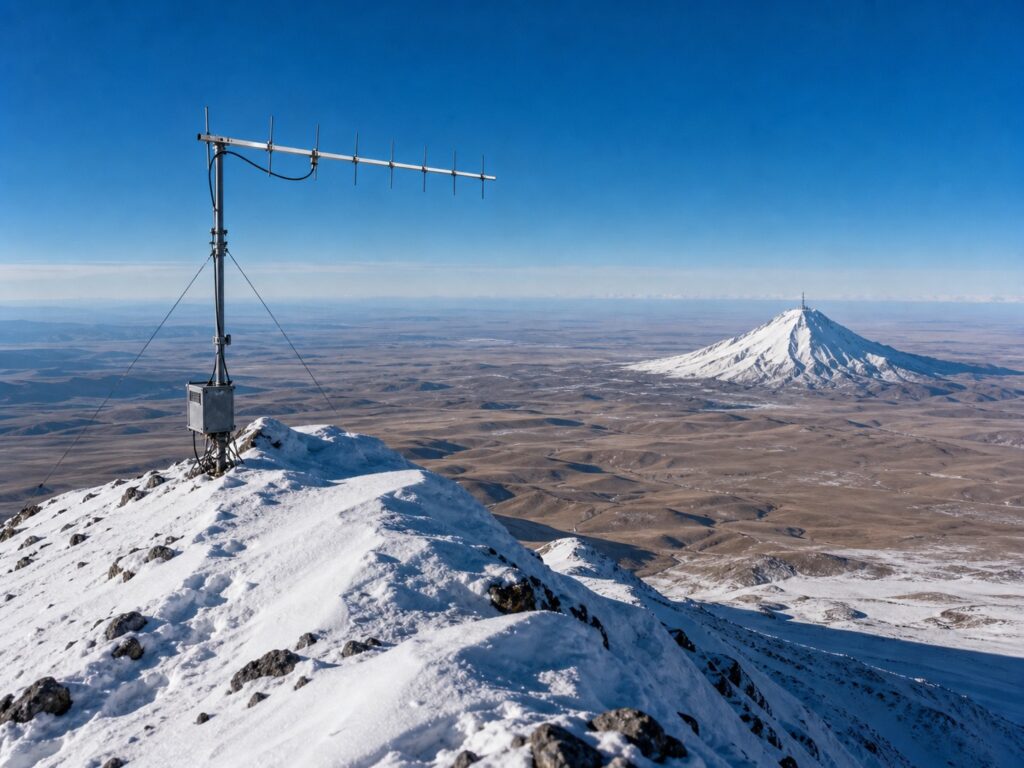
To put this in perspective, consider a more extreme height. If the antenna height were pushed to 9000 meters, beyond the height of Mount Everest, the line-of-sight communication range would expand to roughly 300-330 km.
If two radios were both mounted at 9000 meters, such as on two Himalayan summits, the total range could double to about 600-660 km because both stations benefit from the elevated line of sight. That is a significant improvement, but it is still far from the global reach of shortwave radio.
Space-Based Relays
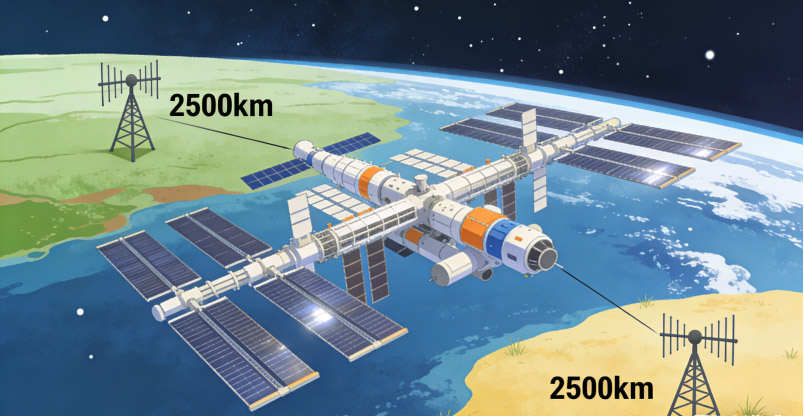
For an even more extreme example, we can look to space. The International Space Station orbits at an altitude of approximately 400 km, and it carries amateur radio VU FM repeater equipment. A ground-based UV radio can communicate with the ISS at distances of up to about 2500 km when the station is in the correct orbital position.
Two ground stations can also use the ISS as a relay, achieving a maximum communication distance of roughly 5000 km. That is impressive, but it depends on space-based infrastructure and precise orbital timing.
Rare Long-Distance Propagation
It is important to distinguish between stable, reliable communication and exceptional long-distance propagation. Occasionally, UV band signals can travel much farther than the line-of-sight limit because of abnormal propagation conditions such as tropospheric ducting, sporadic E-layer ionization, or meteor scatter.
During a strong ducting event, a UV signal may reach 500 km or more. However, these openings are rare, unpredictable, and may last only a few minutes. They are exciting for radio enthusiasts, but they are not a practical basis for regular communication.
How UV Band Compares With HF
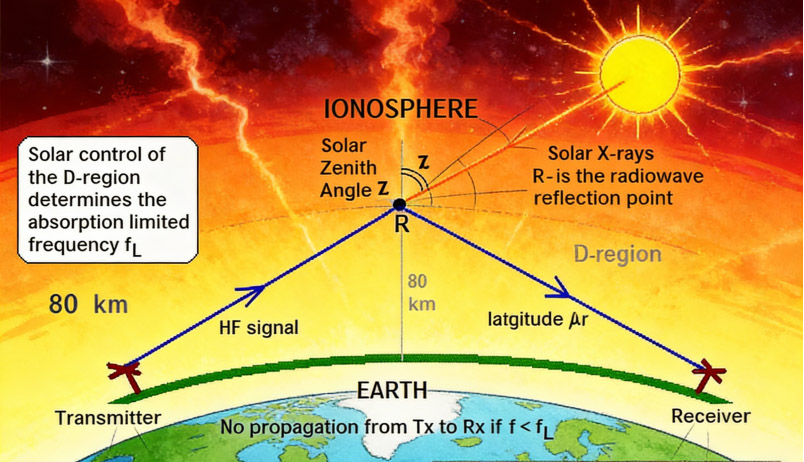
Shortwave, or HF radio in the 3-30 MHz range, is the classic choice for long-distance communication because it can reflect from the ionosphere and the Earth’s surface to travel thousands or even tens of thousands of kilometers. An HF radio with 100 watts of power can communicate across continents under suitable conditions.
UV band communication, by contrast, is strongest for local and regional communication. Its advantages include flexible operating modes such as FM voice, digital data transmission, and video, along with the ability to carry larger amounts of data over shorter paths. Amateur radio operators often use UV bands for local emergency communication, repeater networks, and low-latency data links where short range is acceptable and reliability matters.
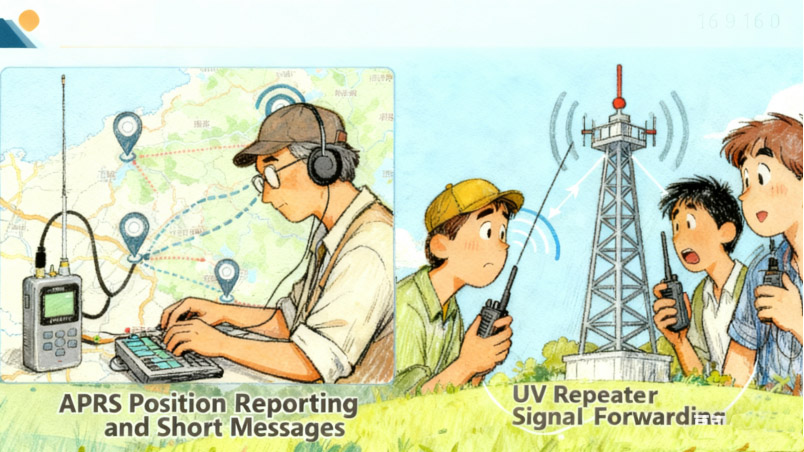
The amateur radio community has found creative ways to extend UV band range through network links. Many enthusiasts use interconnected repeater systems on the 70 cm UV band around 430 MHz, creating networks that relay signals across large areas.
These links can make it difficult to trace the exact propagation path of a signal. What appears to be a direct long-distance contact may actually be a series of hops through a repeater network. Some hobbyists therefore prefer a gentlemen’s agreement: reserve the 2-meter UV band around 144 MHz for genuine long-distance contacts, whether by normal or abnormal propagation, and use the 70 cm band for networked communication.
Real-world examples show where UV band communication is most useful. A group of hikers in a remote mountain range may use a 5-watt handheld radio to stay in contact with a base camp 80 km away if the path is clear. A search and rescue team may use UV radios to coordinate operations across a 100 km area. Amateur astronomers and experimenters may also use UV band data links to transmit images or sensor data from remote sites where high bandwidth and low latency are valuable.
Conclusion
A 1000-meter-high UV band antenna offers a practical communication range of approximately 80-120 km for most realistic setups, with the theoretical radio-horizon distance reaching about 118 km for a handheld receiver at 2 meters above ground.
Extreme heights and specialized systems can extend this range much farther, such as 5000 km through ISS relay operation or long ranges through specialized propagation techniques. However, those cases are not everyday UV band communication. The true strength of the UV band is local and regional high-bandwidth communication, not routine long-distance transmission.
For amateur radio enthusiasts, the challenge and excitement of UV long-distance communication lie in chasing rare propagation events, building better antenna sites, and experimenting with repeater networks. Setting realistic expectations makes the band more useful and more enjoyable.